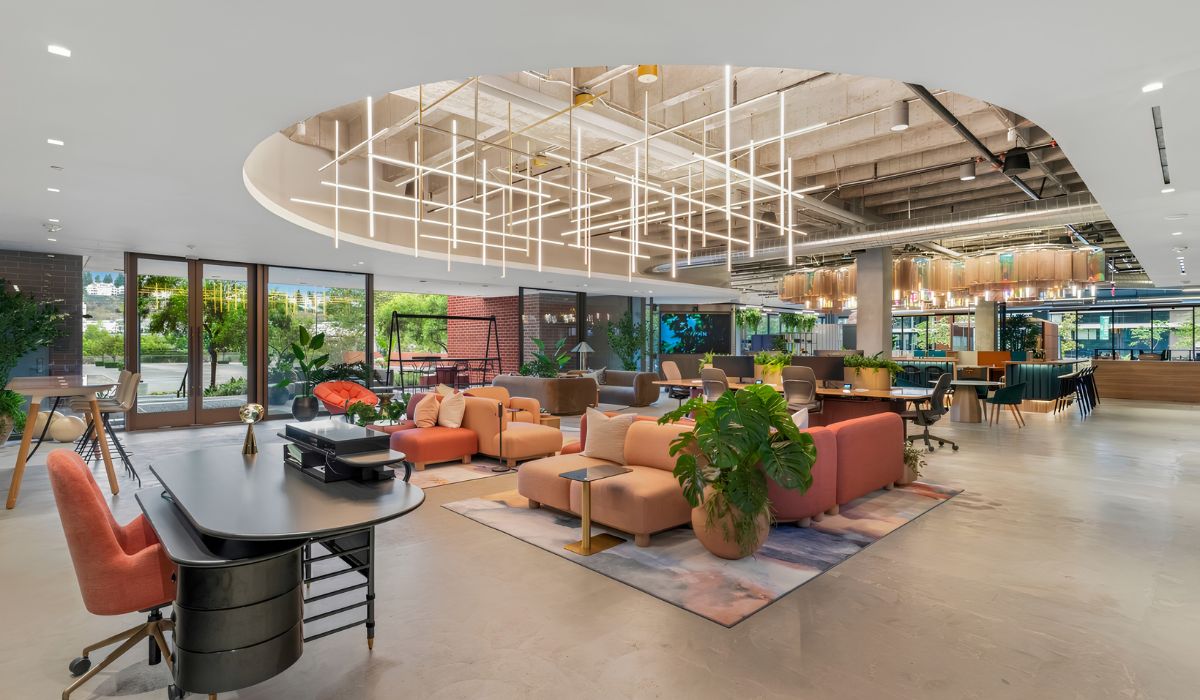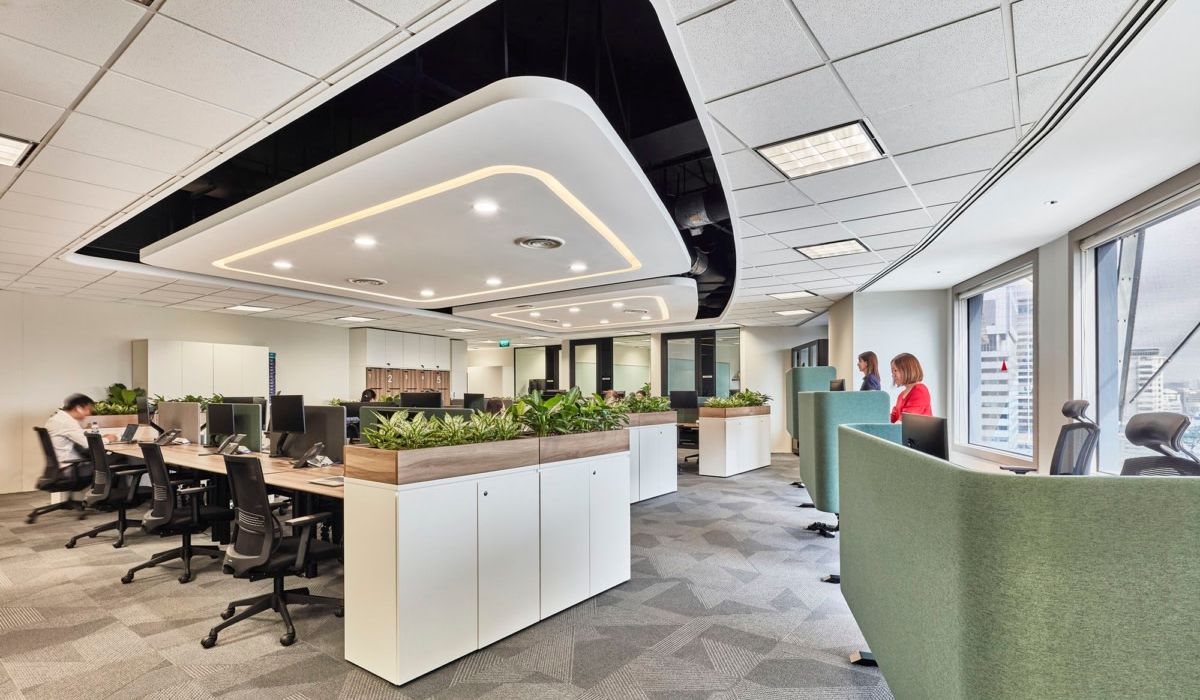
Office interior design materials are used for desks, chairs, cabinets, partitions, floors, and ceilings. Each material has different characteristics in terms of durability, appearance, cleaning, and maintenance. Businesses need to consider the function of each area, operating conditions, and budget to select suitable materials.
1. What are office interior design materials?
Office interior design materials are the materials used to manufacture furniture and finish workspaces. Common options include wood, glass, metal, stone, plastic, and various cladding, tiling, and decorative materials. Depending on where they will be used, businesses need to select materials that meet functional, durability, aesthetic, and cost requirements.
2. The importance of interior materials in office design
Materials help determine the quality and appearance of an office’s finishes. Office desks need durable surfaces that are easy to clean, while pantries require materials suitable for frequent exposure to water. Colors, grain patterns, and surface textures also create consistency throughout the design and reflect brand identity.
Selecting suitable materials also helps businesses control initial investment and maintenance costs throughout use. Safety, acoustic performance, and building services requirements should be considered during the design stage to limit changes during implementation.
3. Common office interior design materials
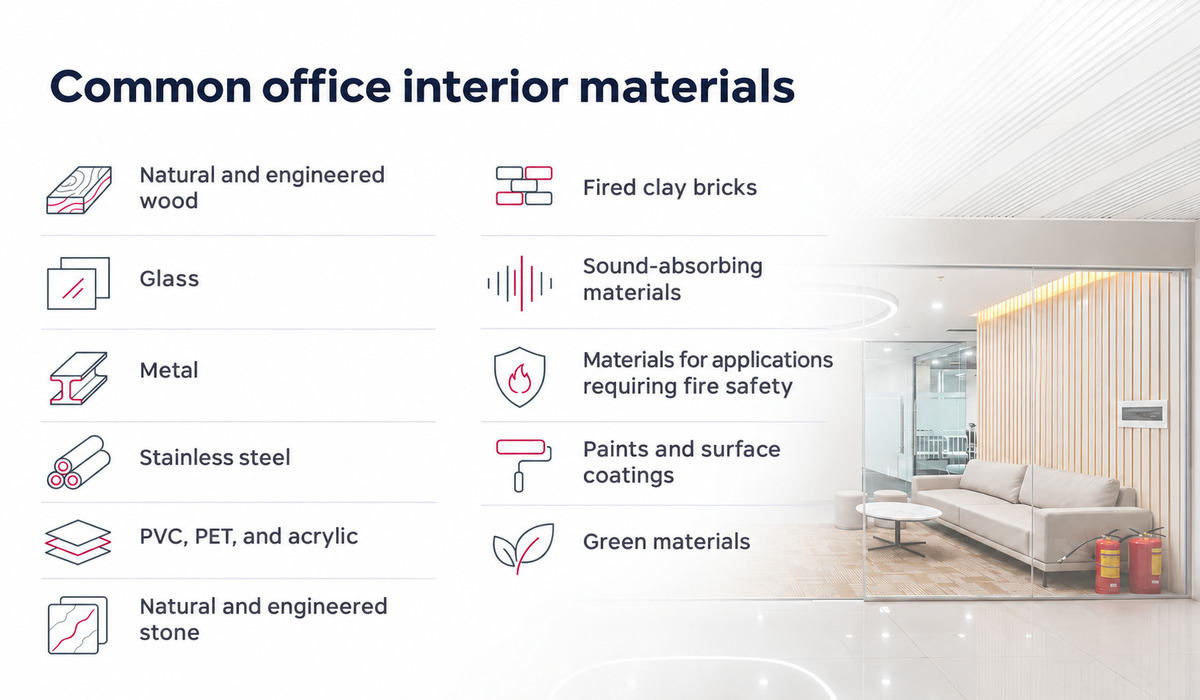
Wood, glass, metal, plastic, and stone are commonly used in office interiors. Each offers different characteristics in terms of durability, color, surface finish, and application. Depending on the function of each area, businesses can combine materials to meet practical needs and maintain a consistent design.
3.1. Solid wood and engineered wood
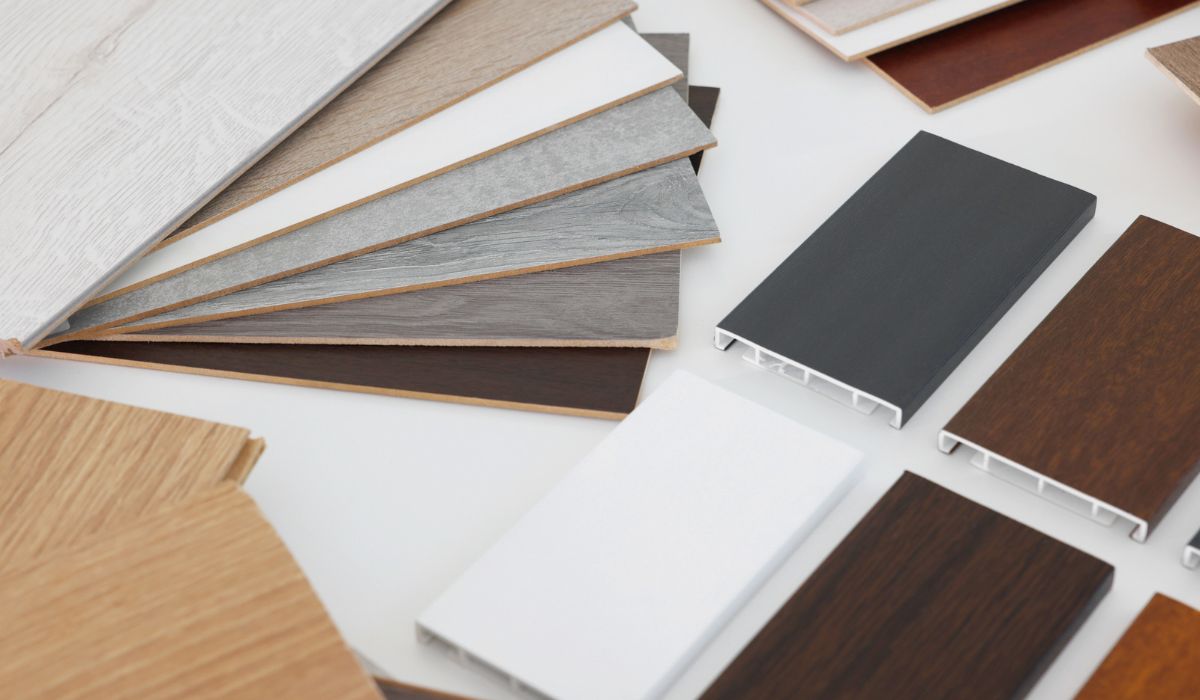
Engineered wood products such as MDF and MFC are widely used for office desks, filing cabinets, and storage shelves. Surfaces are typically finished with melamine or laminate, offering a variety of colors and woodgrain patterns. For areas with high humidity, businesses need to consider the moisture resistance of the board core and the quality of edge finishing.
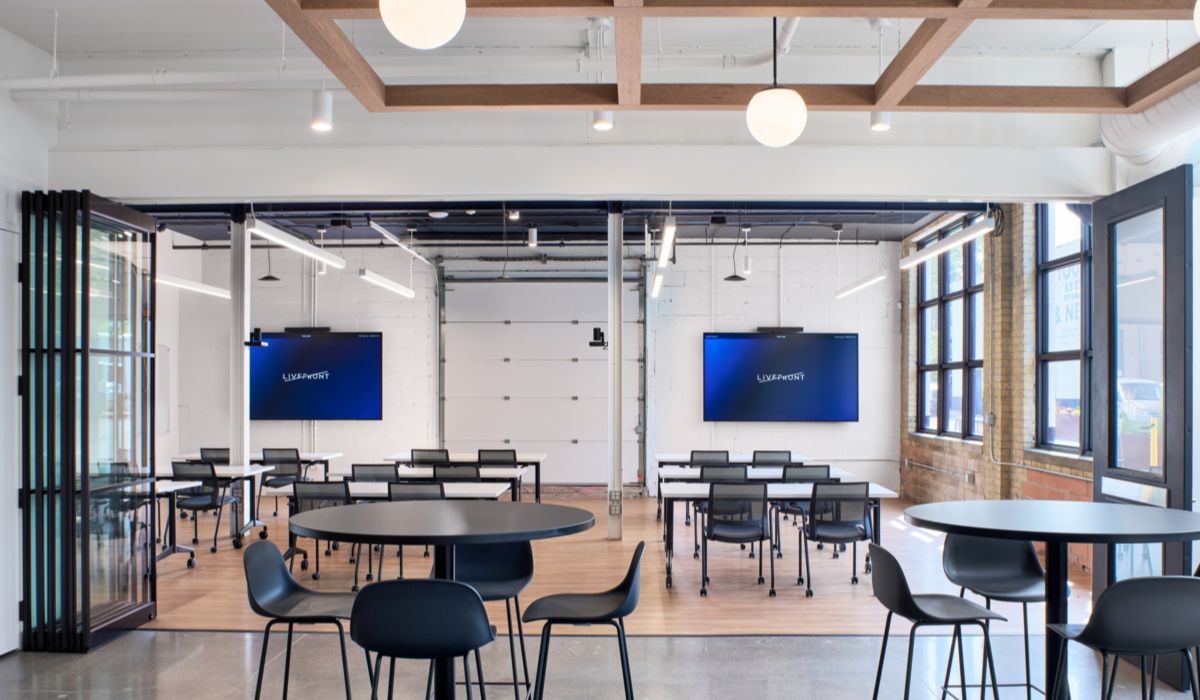
Solid woods such as oak and walnut have distinctive colors and grain patterns and are often selected for desks, cabinets, and decorative details. Product quality and durability depend on the wood species, fabrication methods, and conditions of use.
3.2. Glass
Tempered glass and laminated safety glass are commonly used for doors, meeting room partitions, and areas that require light transmission. Clear glass creates a sense of openness, while frosted glass or glass with applied film suits locations where views from outside need to be restricted.
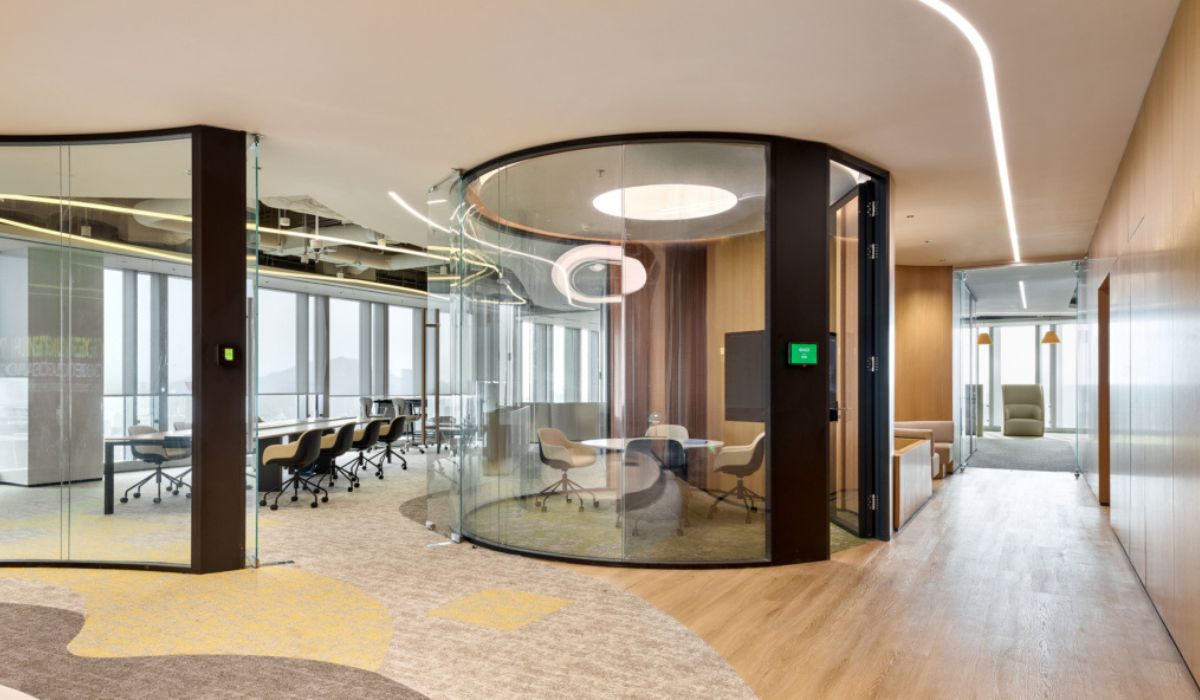
For meeting rooms or areas requiring acoustic privacy, businesses need to assess the sound insulation performance of the complete partition system, including the glass, framing, seals, and joints. Using thicker glass alone does not guarantee effective sound insulation.
3.3. Metal
Powder-coated steel and aluminum are commonly used for desk legs, partition frames, shelving, and interior details. These materials can be fabricated into various shapes, making them suitable for fixed furniture and systems that require disassembly or adjustment.
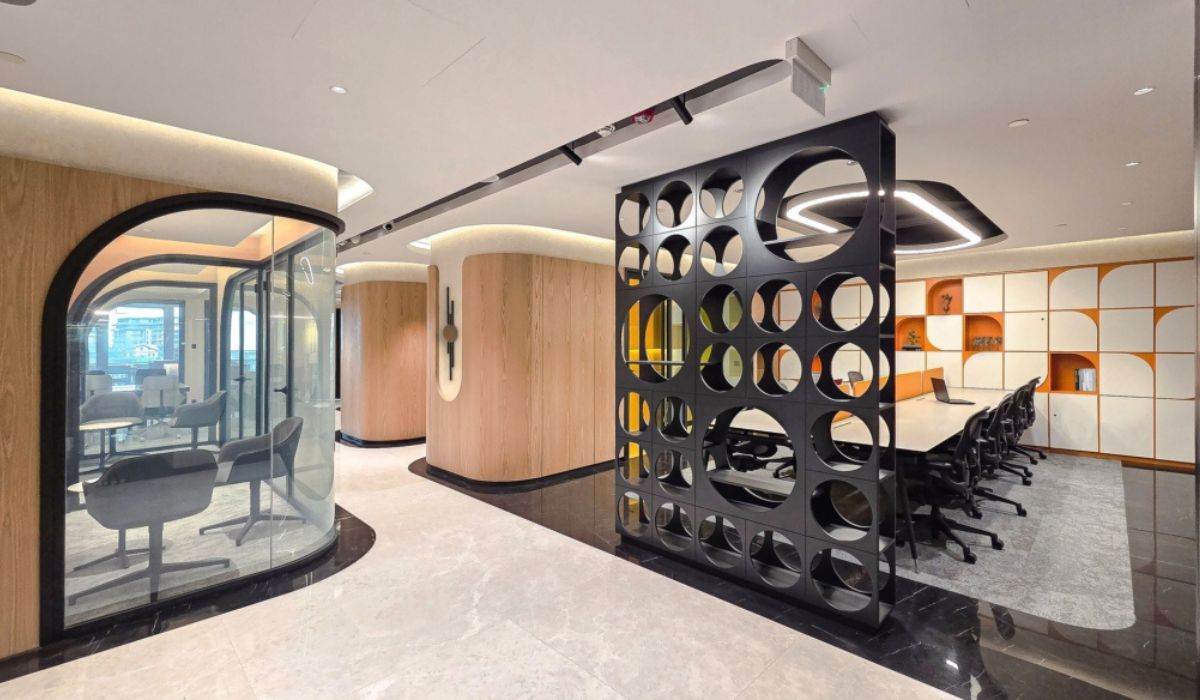
Powder-coated metal offers a variety of colors and surface finishes and combines easily with wood or glass in office design. When selecting products, businesses need to check structural stability, coating quality, and corrosion resistance against the intended conditions of use.
3.4. Stainless steel
Stainless steel is commonly used for sinks, pantry countertops, door handles, and decorative details in offices. Its corrosion resistance and ease of cleaning make it suitable for areas frequently exposed to water. Polished, matte, or brushed finishes can be selected to suit the interior design.
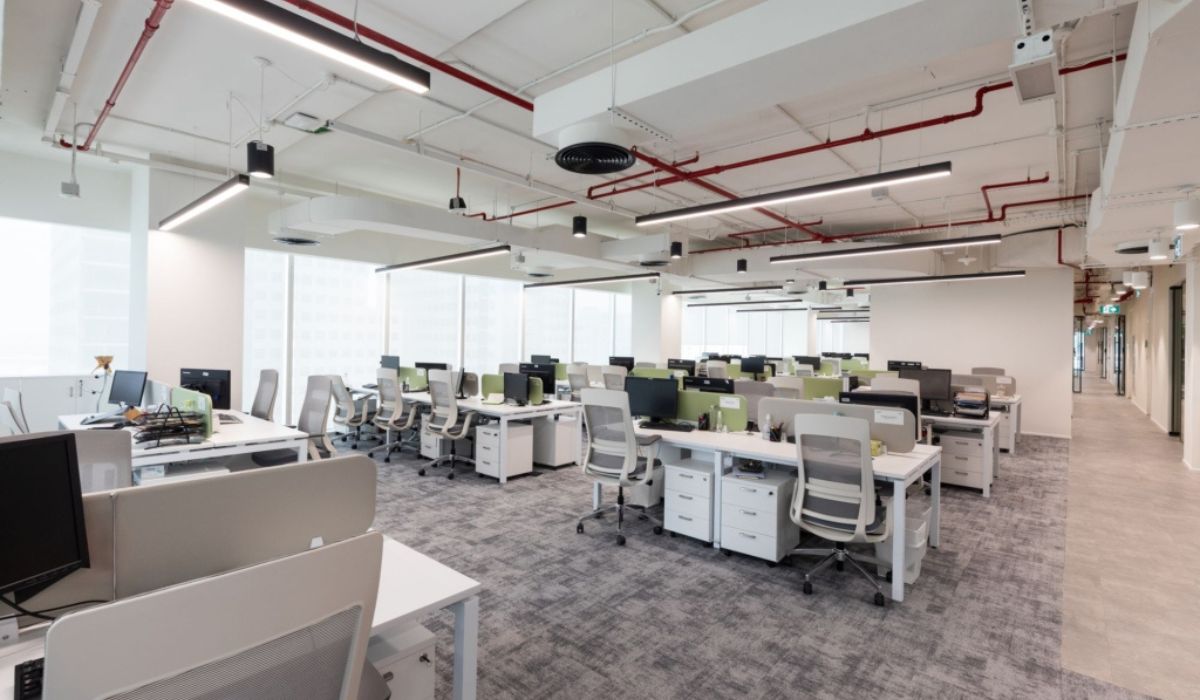
When selecting stainless steel, businesses need to consider the steel grade, surface quality, and conditions of use. Areas frequently exposed to water or cleaning agents require products with suitable corrosion resistance.
3.5. PVC, PET, and acrylic plastics
PVC is used for decorative panels, surface films, and edge banding. Acrylic offers various colors and glossy or matte finishes and is commonly used for cabinet fronts and decorative details. PET is used for furniture surface finishes or acoustic panels, depending on the product’s composition.
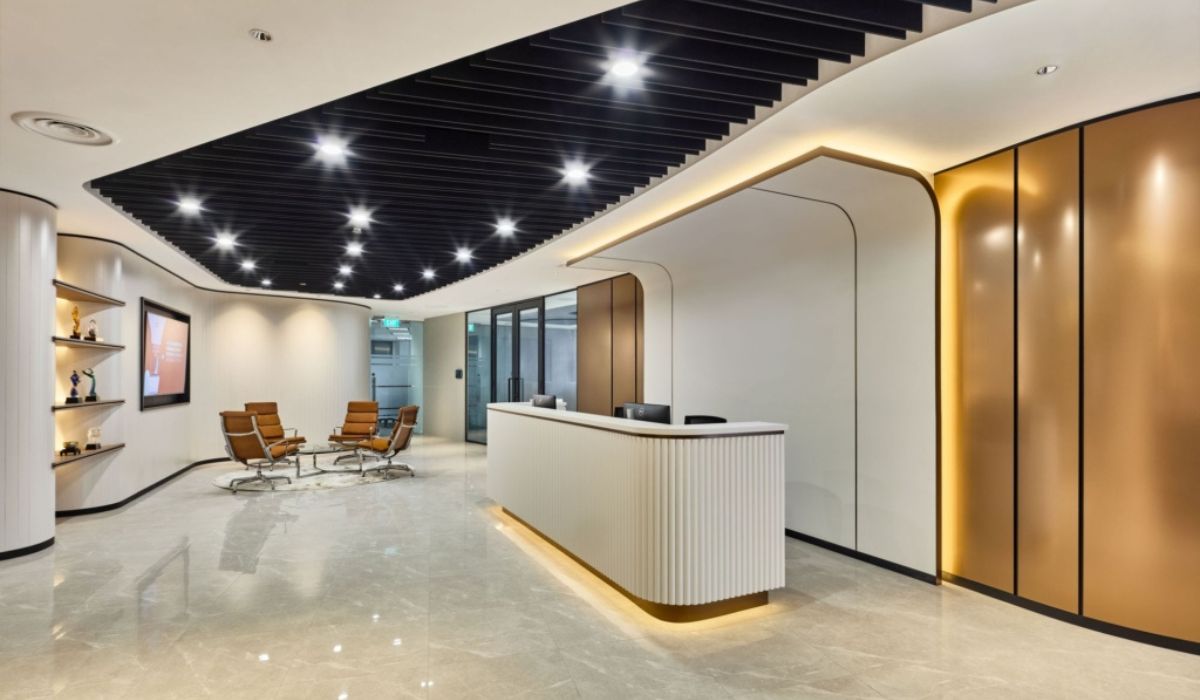
Each plastic has different characteristics in terms of durability, moisture resistance, and scratch resistance. For pantry cabinets or locations exposed to water, businesses need to check the surface material, substrate, and quality of the joints.
3.6. Natural and engineered stone
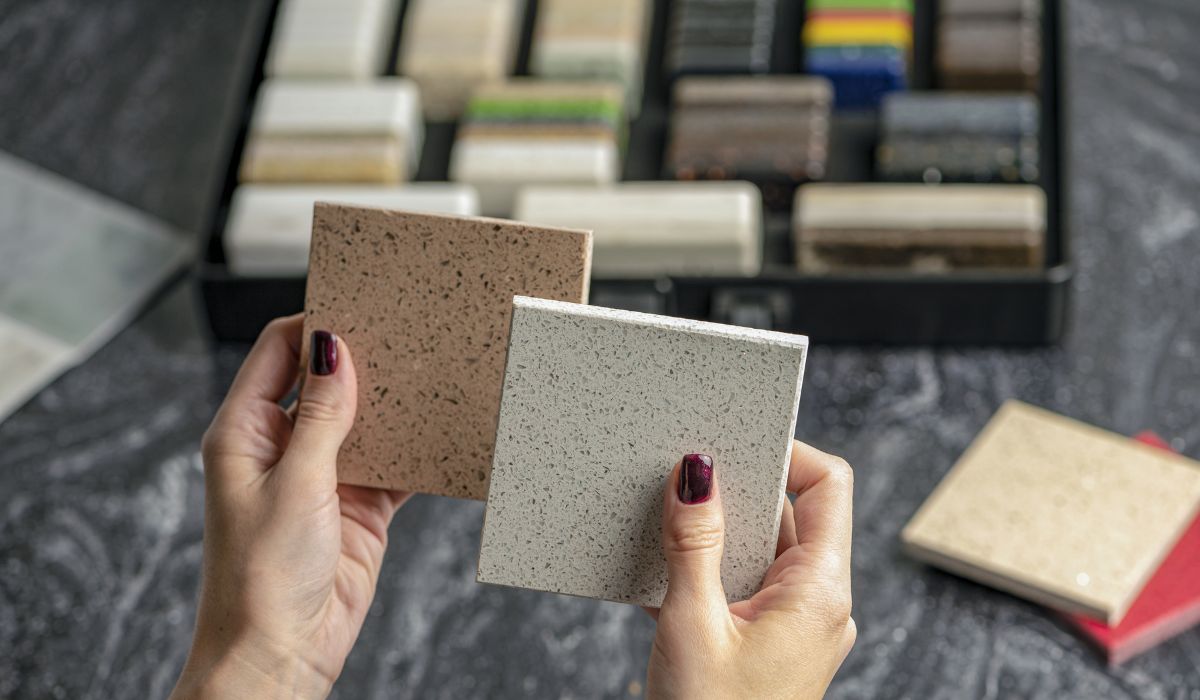
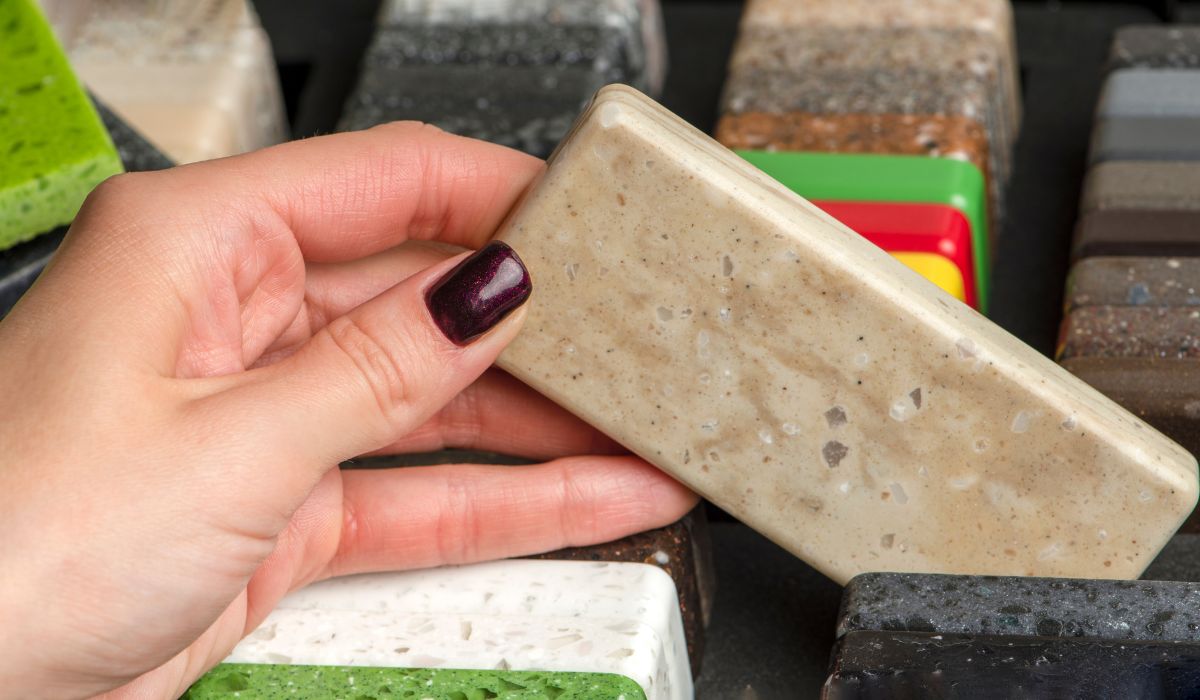
Natural stones such as granite and marble, along with engineered stone, are commonly used for reception counters, pantry countertops, and decorative details. Natural stone features distinctive colors and veining, while engineered stone offers various colors and finishes suitable for designs requiring a consistent appearance.
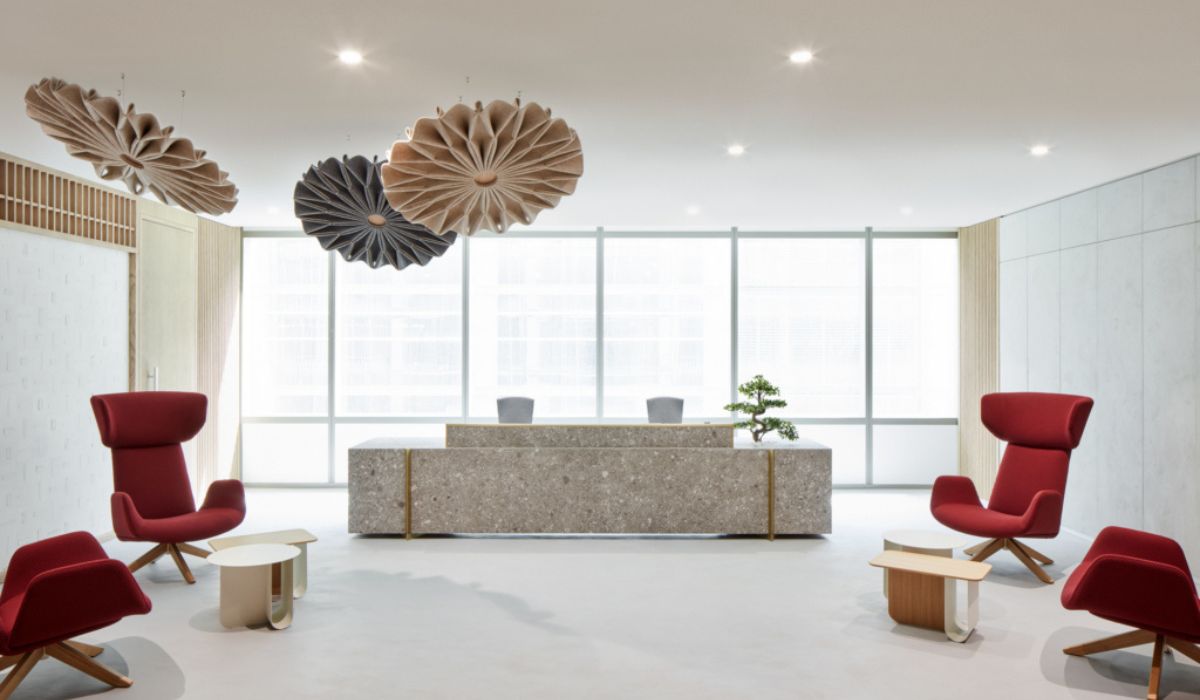
Each type of stone differs in hardness, resistance to water penetration, and scratch resistance. For pantry countertops or areas frequently exposed to water, businesses need to select products with suitable surfaces and follow cleaning and maintenance instructions.
3.7. Clay brick
Clay brick is commonly used to decorate walls, reception counters, and communal areas in offices. Its reddish-brown color and natural surface texture create visual accents, particularly in industrial or rustic interiors.
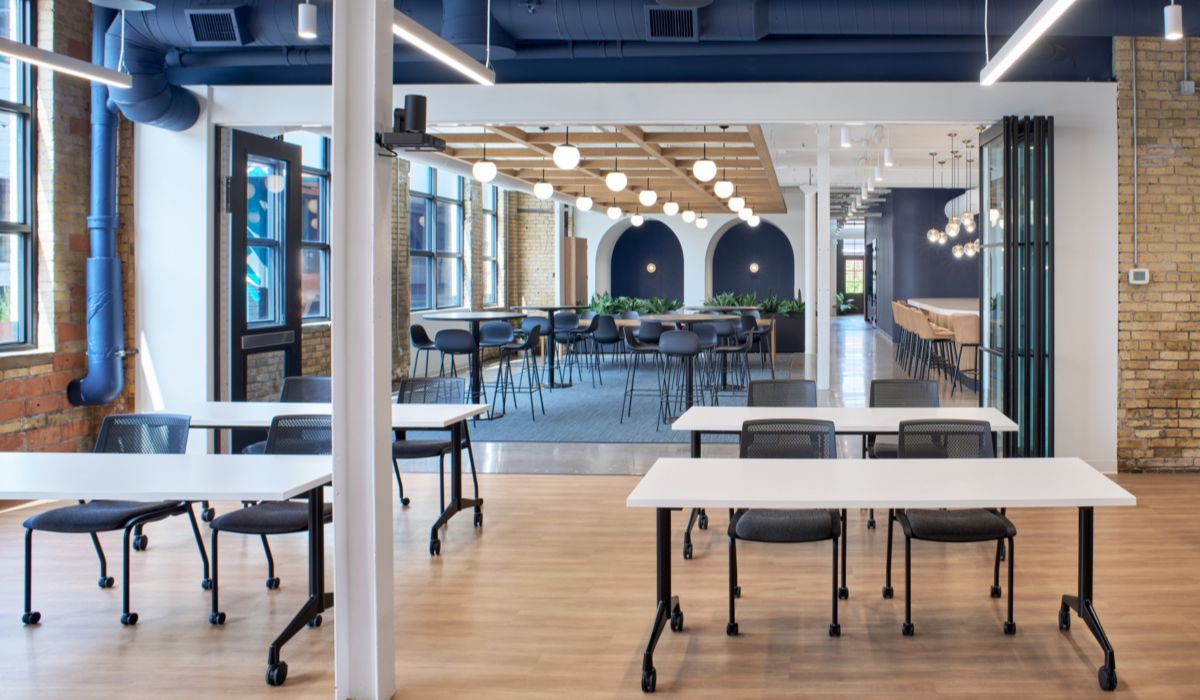
Depending on the design, businesses can choose exposed brick walls or clay brick slips. Weight, installation methods, and ease of cleaning need to be considered. In areas with high humidity, water absorption and surface treatment options should be checked to help limit efflorescence.
3.8. Acoustic materials
Acoustic materials such as polyester (PET) panels, felt-covered panels, and perforated ceilings are commonly used in meeting rooms, shared work areas, and spaces where reverberation needs to be controlled. Each offers different sound absorption properties, colors, and installation methods to meet acoustic and aesthetic requirements.
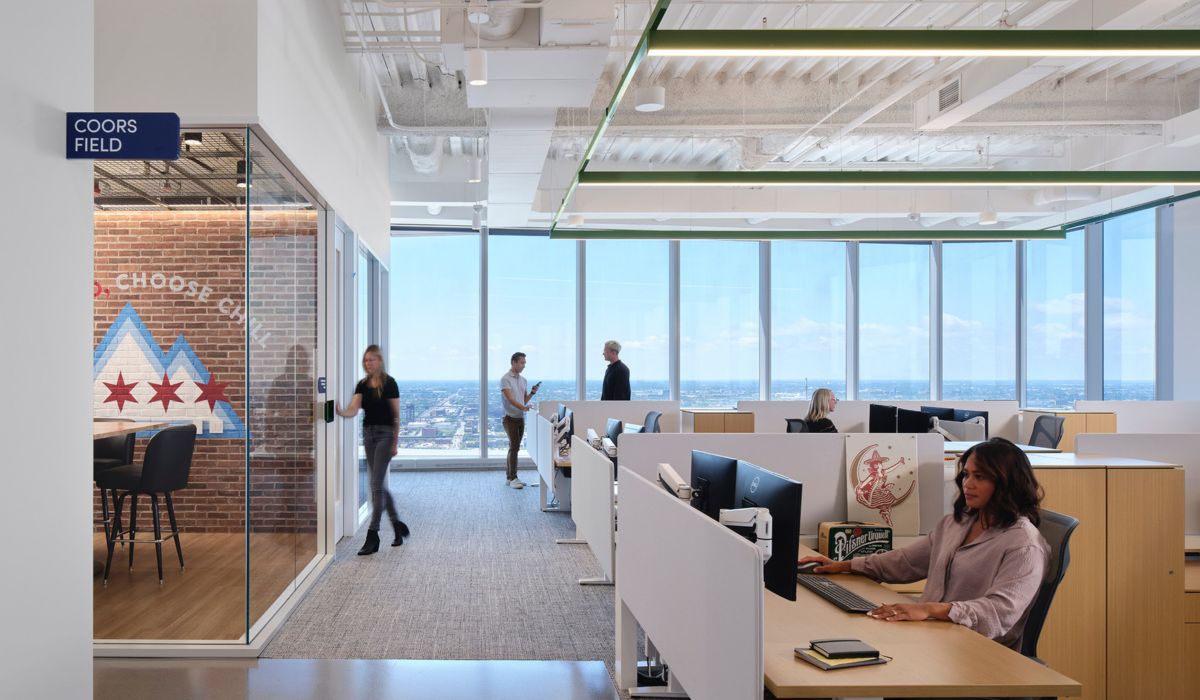
When selecting products, businesses need to assess sound absorption performance against the characteristics of the space and the product’s technical specifications. Acoustic materials reduce reflected sound within a room, while preventing noise transmission between rooms requires suitable sound insulation solutions.
3.9. Materials for applications with fire safety requirements
Fire-resistant gypsum boards, fire-rated doors, and structural fire protection coatings are commonly used in applications with fire safety requirements. Each product has specific performance characteristics and applications, depending on its construction, installation conditions, and test results.
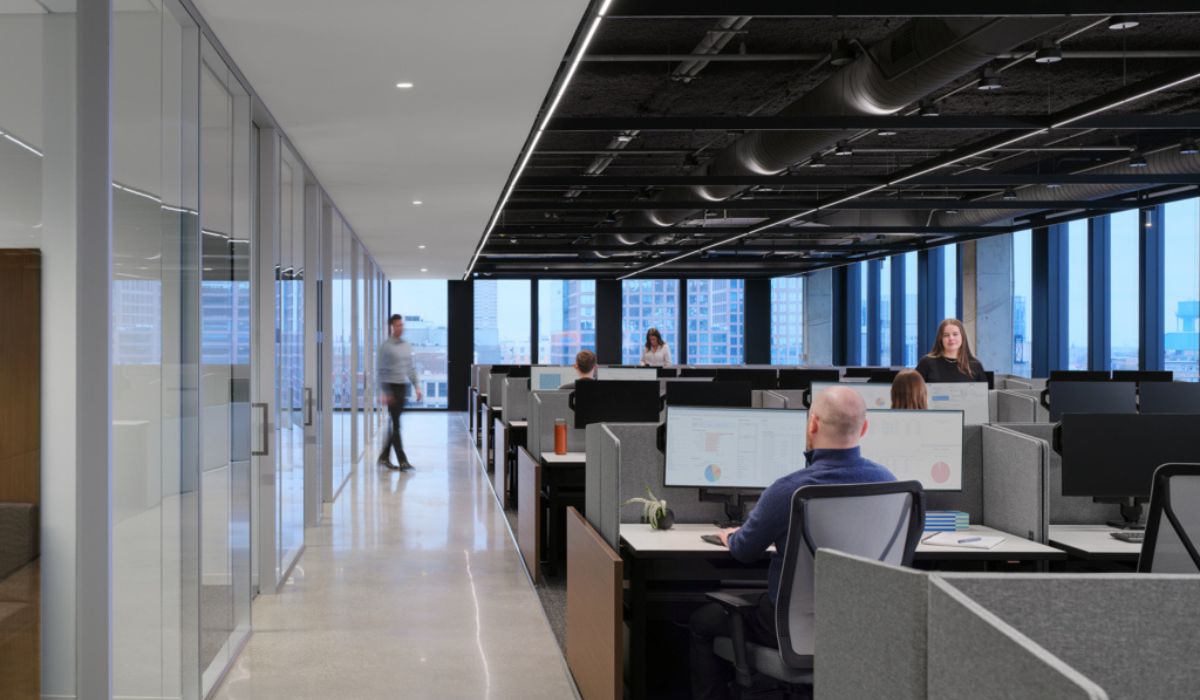
For partitions, ceilings, and doors, businesses need to select materials that meet the design documentation and the fire safety regulations applicable to the project. Fire resistance or reaction-to-fire ratings need to be verified for each product and complete assembly.
3.10. Paints and surface finishes
Melamine and laminate are commonly used to finish office desks, filing cabinets, and engineered wood products. Both finishes offer various colors, woodgrain patterns, and surface textures while helping protect the board core during use. Durability and moisture resistance depend on the finish, board core quality, and fabrication methods.
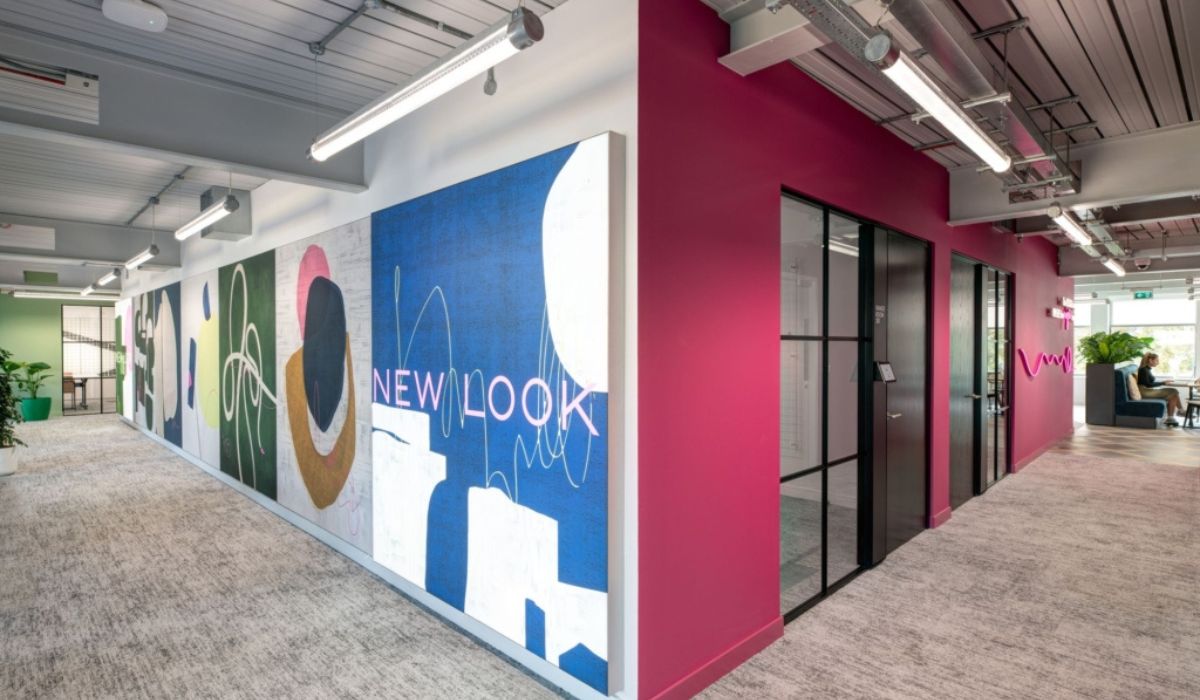
Polyurethane (PU) and water-based paints are also used to add color and finish interior surfaces. For paint products with low-VOC emissions claims, businesses need to check the corresponding technical information. Further information is available on the characteristics and applications of melamine-faced wood panels.
3.11. Green materials
Green materials in office interiors generally refer to products with environmental attributes such as certified raw material sourcing, recycled content, or low emissions. Common options include FSC-certified wood, acoustic panels made from recycled polyester fibers, and paint products with low-VOC emissions claims.
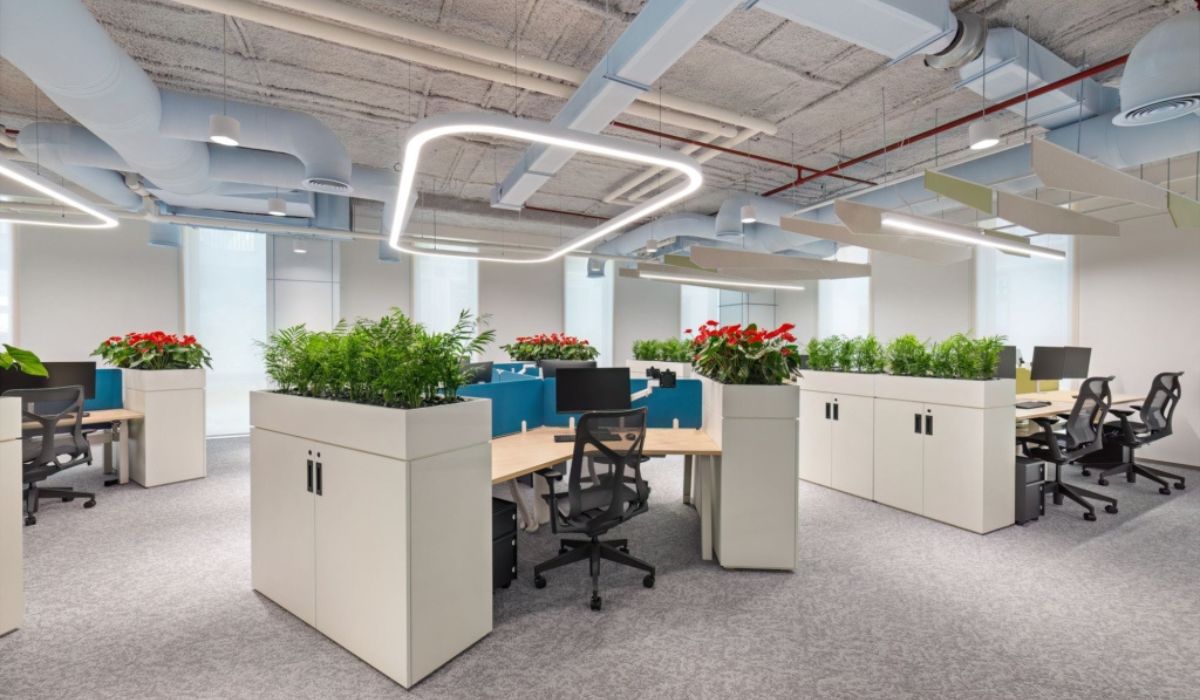
Businesses need to review each product’s certifications or environmental information while checking durability, functionality, and maintenance requirements. A material with recycled content or low emissions still needs to meet the office’s operating conditions.
4. Criteria for selecting office interior design materials
Material assessment needs to reflect the intended use of each item and the office’s actual conditions. A material suitable for work areas may require different specifications when used in a pantry, corridor, or storage area.
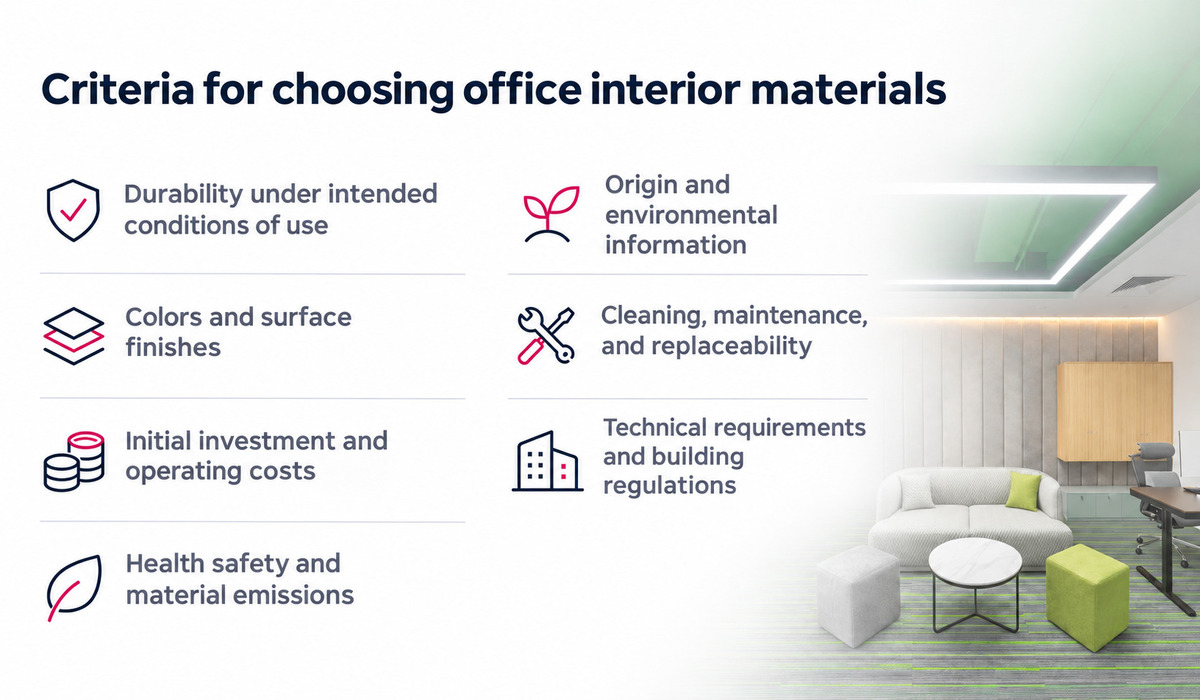
4.1. Durability under intended conditions of use
Office desks, filing cabinets, and surfaces in communal areas are subject to repeated wear during use. Materials need suitable load-bearing capacity, abrasion resistance, and the ability to maintain surface quality at the expected frequency of use.
When assessing durability, businesses should consider product construction, installation location, and maintenance conditions. Actual service life also depends on fabrication quality, the environment, and how the product is used. A single fixed service-life range therefore cannot apply to every material.
4.2. Colors and surface finishes
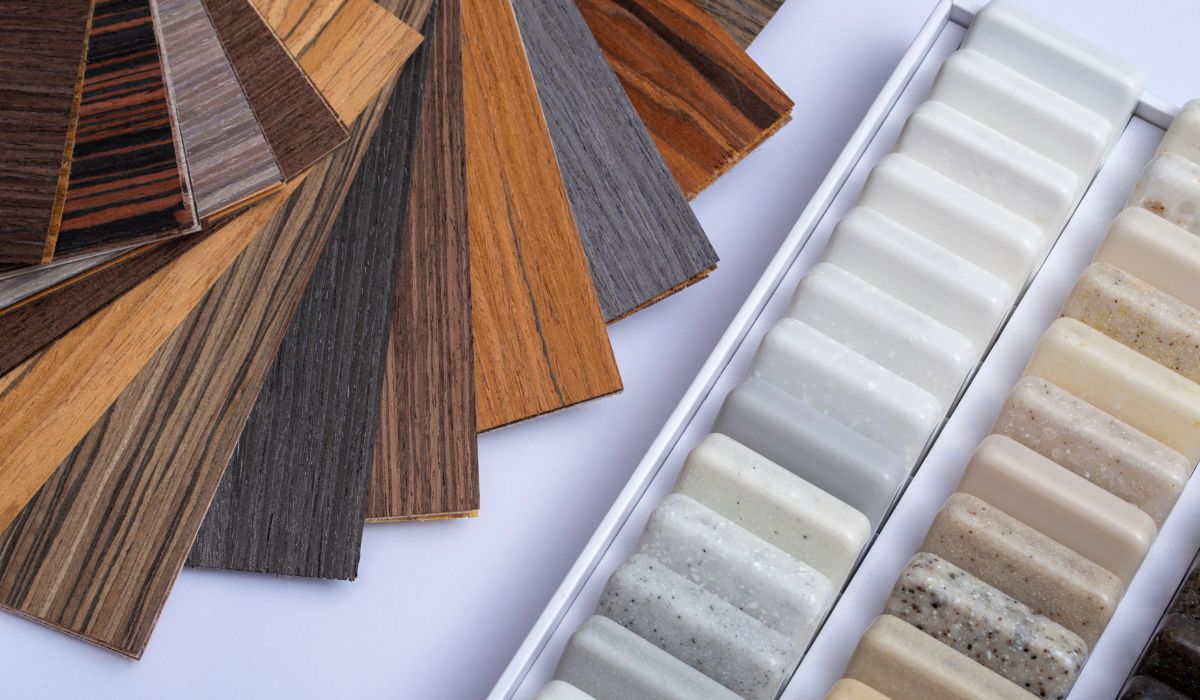
Color, grain patterns, gloss levels, and surface textures influence the visual character of an office. Wood can create a sense of warmth, glass maintains openness, and stone and metal produce different surface effects.
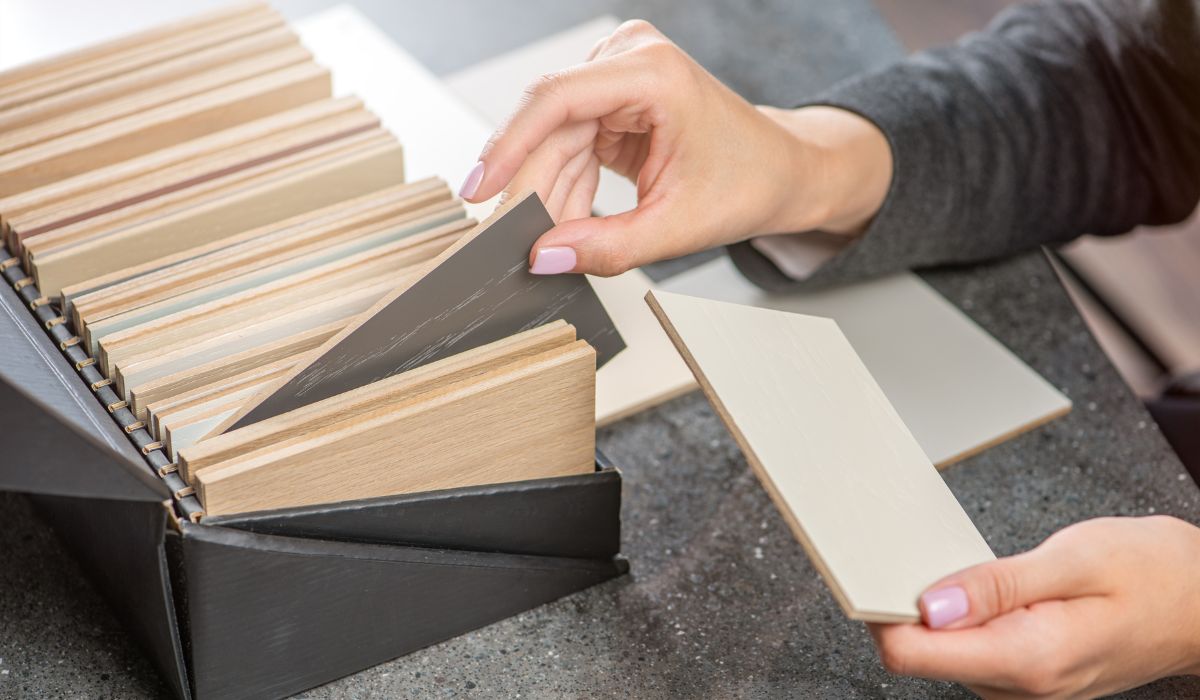
When combining materials, businesses need to consider consistency across furniture, partitions, flooring, and finishing details. Reviewing samples under actual lighting conditions helps assess color and reflectivity before approving the design.
4.3. Initial investment and costs during use
Material costs need to be assessed alongside product specifications, quantities, and finishing requirements. For example, a desk made from melamine-faced engineered wood has a different cost structure from a solid wood desk. However, the price difference also depends on the board core, dimensions, hardware, and fabrication quality.
Beyond the initial purchase price, businesses need to consider installation, cleaning, maintenance, and replacement costs. When comparing options, the scope of work and expected period of use need to be defined consistently to provide a sound basis for cost assessment.
>> Read more: How to calculate material cost escalation in office interior design and construction

4.4. Health considerations and material emissions
Some engineered wood products, adhesives, and finishing paints can emit formaldehyde or volatile organic compounds (VOCs). When selecting products, businesses need to check the relevant emissions information and test reports.
Labels such as E0, E1, or Low VOC need to be read alongside the corresponding standards and test methods. Product emissions also differ from actual pollutant concentrations in an office, which depend on multiple emission sources and ventilation conditions.
4.5. Sourcing and environmental information
Raw material sourcing, recycled content, and environmental impact information are factors that can be considered when selecting materials. FSC certification relates to forest product sourcing and chain of custody. An Environmental Product Declaration (EPD) provides information about environmental impacts within a defined assessment scope.
Each document serves a different purpose. Businesses need to check whether the certification or declaration applies to the specific product selected and review other technical information when assessing quality and suitability for the intended conditions of use.
4.6. Cleaning, maintenance, and replaceability
Interior surfaces need to suit the cleaning frequency and typical conditions encountered during operation. Glass, stone, coated metal, and engineered wood require different cleaning methods. Businesses need to check each product’s moisture resistance, suitable cleaning agents, and maintenance requirements.
For demountable cabinet or partition systems, connection details and the availability of replacement hardware also need to be considered. Details such as edge banding, hinges, drawer slides, and joints can affect long-term performance.
4.7. Technical requirements and building regulations
Materials need to meet the technical requirements of each application and the conditions applicable to the building. Issues to consider may include loads, fire safety, connection details, transportation conditions, and the approved scope of construction.
For works involving fire prevention and firefighting requirements, businesses need to refer to QCVN 06:2022/BXD, Amendment 1:2023, and current regulations applicable to the project. Specific requirements must be established in the design documentation and technical documents. A single checklist cannot apply to every material.
5. Selecting materials for each office area
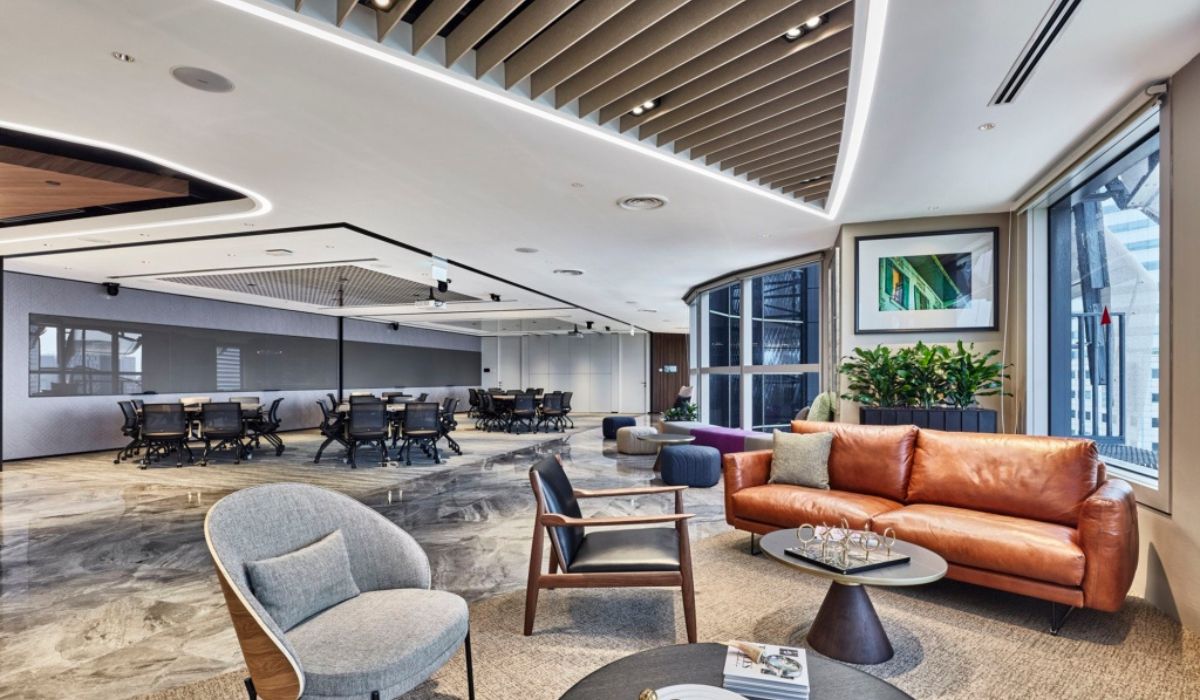
Each office area has different requirements for appearance, frequency of use, and cleaning. Businesses can compare the function of each space with material properties before defining product specifications. Selections need further review against the design and actual site conditions.
| Area | Material options | Criteria to consider |
|---|---|---|
| Reception and visitor waiting areas | Natural or engineered stone, laminate-faced engineered wood, glass, porcelain tiles | Surface durability, ease of cleaning, color, and finish |
| Corridors and communal areas | Porcelain tiles, SPC/LVT flooring, commercial carpet tiles | Abrasion resistance, slip resistance, cleaning, and replacement |
| Open work areas | Melamine- or laminate-faced engineered wood desks, powder-coated steel legs, felt-covered partitions | Surface durability, maintainability, stability, and sound absorption needs |
| Meeting rooms | Engineered wood tables, glass partitions, acoustic ceilings or panels | Light reflectivity, privacy requirements, and acoustic performance |
| Executive offices | Solid wood, veneer, faced engineered wood, frosted glass, upholstery materials | Design style, color, surface feel, and maintenance conditions |
| Pantries and dining areas | Engineered wood cabinets with a suitable moisture-resistance grade, laminate, engineered stone, stainless steel, moisture-resistant flooring | Ease of cleaning, water exposure, edge treatment, and joints |
| Restrooms | Ceramic tiles, engineered stone, stainless steel, moisture-resistant doors and finishes | Slip resistance, moisture resistance, and compatibility with cleaning agents |
| Rest and relaxation areas | Upholstery fabrics, carpet, wood, soft surface materials | Comfort, ease of cleaning, durability, and safety requirements |
| Storage areas and stockrooms | Steel shelving, engineered wood cabinets, floor finishes with suitable load capacity | Storage loads, structural stability, and maintainability |
| Technical areas and server rooms | Raised access flooring with suitable performance characteristics, finishing materials specified in the technical documentation | Load requirements, electrostatic control, fire safety, and equipment access |
For floors, ceilings, and partitions, material selection also depends on the complete assembly and associated technical requirements. Office flooring options need to be assessed for each specific application, particularly in areas with heavy foot traffic or frequent cleaning requirements.
6. Considerations when selecting office interior materials
Beyond material properties, businesses need to consider site conditions, installation requirements, and supply availability. Checking these factors helps identify suitable options and limit unexpected issues during implementation.
- Site and installation conditions: Check dimensions, humidity, technical requirements, and material transportation access.
- Supply and replacement availability: Confirm specifications, colors, lead times, and the ability to order additional quantities when needed.
- Coordination with related works: Coordinate material selections with office interior design and construction, particularly at connections between ceilings, floors, and partitions.
7. Checking materials before approval
Before finalizing office interior design materials, businesses need to compare the proposed products with the requirements in the design documentation. Reviews should focus on physical samples, technical specifications, and quality documentation applicable to each item.
7.1. Checking material samples and specifications
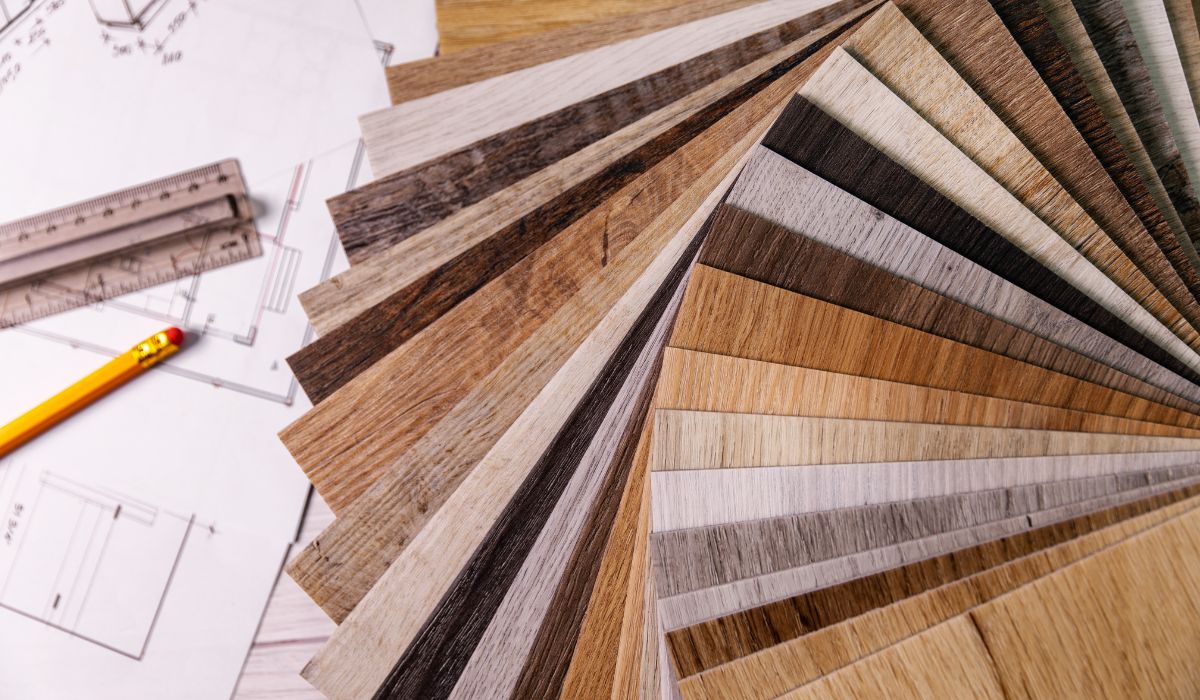
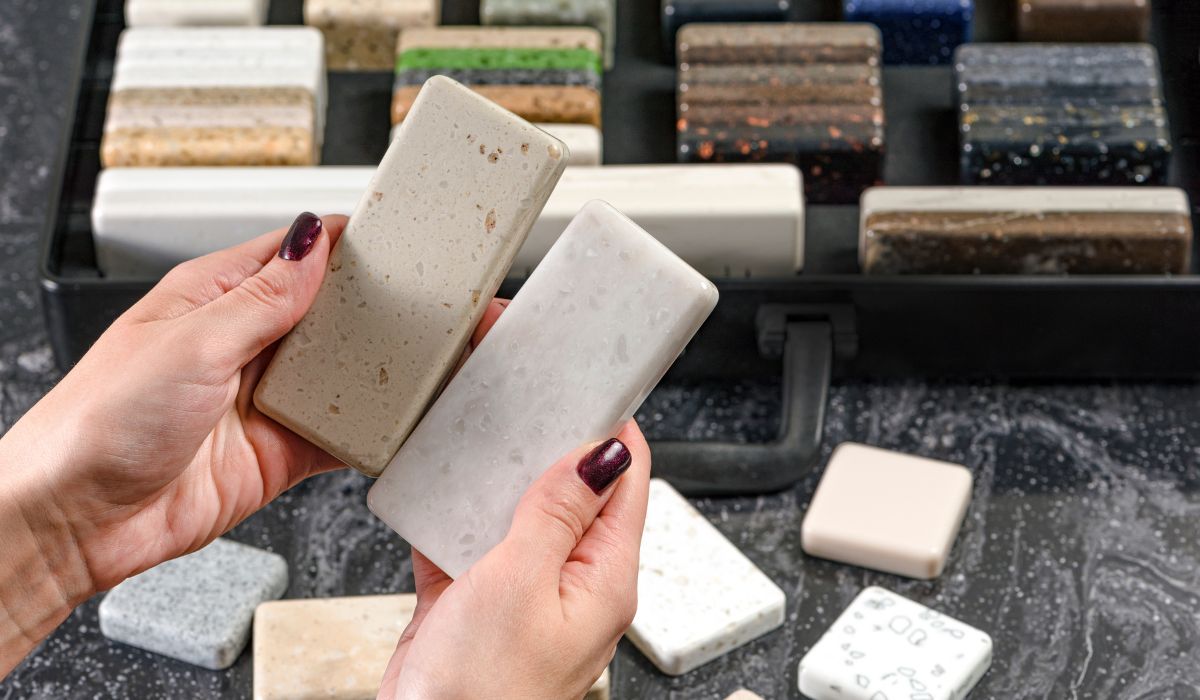
Material samples need to be checked for color, texture, thickness, and finish against the design requirements. For engineered wood, the board core, surface finish, and edge banding all need to be reviewed. For glass, stone, or metal, businesses need to check product specifications and the properties relevant to the intended location.
Requirements for load-bearing capacity, moisture resistance, acoustic performance, or emissions need to be verified against appropriate technical documents and test results. Acceptance criteria must follow the agreed documentation rather than applying a fixed threshold to every material.
7.2. Checking quality documentation and warranties
Quality documentation needs to identify the product, specifications, origin, and any applicable certifications or test results. Depending on the material, businesses may need to review technical documents, regulatory conformity certificates, or evidence demonstrating the performance required for the application.
Warranty conditions need to be clarified for each product and scope of work, including the warranty period, exclusions, responsibility for resolving issues, and replacement hardware availability. These details need to be confirmed through specific policies or agreements before procurement approval.
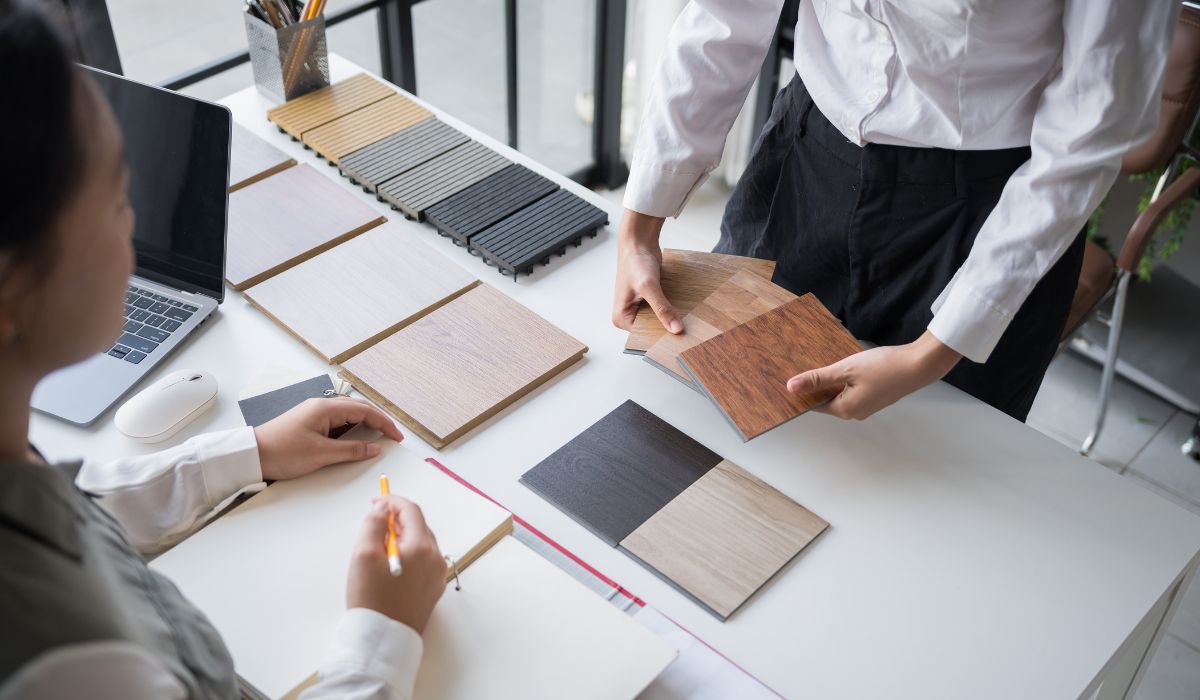
Selecting office interior design materials should begin with the function of each area and its actual conditions of use. Once durability, surface finish, budget, and technical requirements have been defined, businesses can compare options on a consistent basis. Clearly approved material samples and quality documentation help control changes during implementation.
8. Frequently asked questions (FAQ)
8.1. Should engineered wood or solid wood be used for office desks?
Engineered wood products such as MDF and MFC offer various colors, finishes, and fabrication options, making them suitable for office desks produced in quantity. Solid wood suits designs that prioritize natural colors and grain patterns. Businesses need to consider budget, aesthetic requirements, and conditions of use when making their selection.
8.2. Do office interior design materials have a fixed service life?
Material service life depends on the material type, product construction, fabrication quality, and conditions of use. Two products made with MDF or metal frames can still differ in durability. Businesses need to check the technical specifications, warranty conditions, and maintenance instructions for each product.
8.3. Do all office interior design materials require fire safety inspection certificates?
Office interior design materials do not all require the same type of fire safety inspection certificate. Documentation and evidence of quality depend on the product type, application, and regulations applicable to the project. Businesses need to compare the design documentation with current fire safety regulations to determine the specific requirements.
8.4. Which materials are suitable for office pantries?
Office pantries commonly use engineered stone or stainless steel for countertops, engineered wood with suitable moisture resistance for cabinets, and tile or vinyl flooring for circulation areas. When selecting materials, businesses need to consider ease of cleaning, slip resistance, edge treatment, and locations frequently exposed to water.
8.5. What should businesses check when comparing quotations for interior materials?
Businesses need to compare material types, specifications, thicknesses, finishes, and hardware across the proposed options. Quotations also need to clearly state the scope of fabrication and installation, along with warranty conditions. Comparing options against the same technical requirements helps businesses assess costs more accurately and select materials that fit their budget.