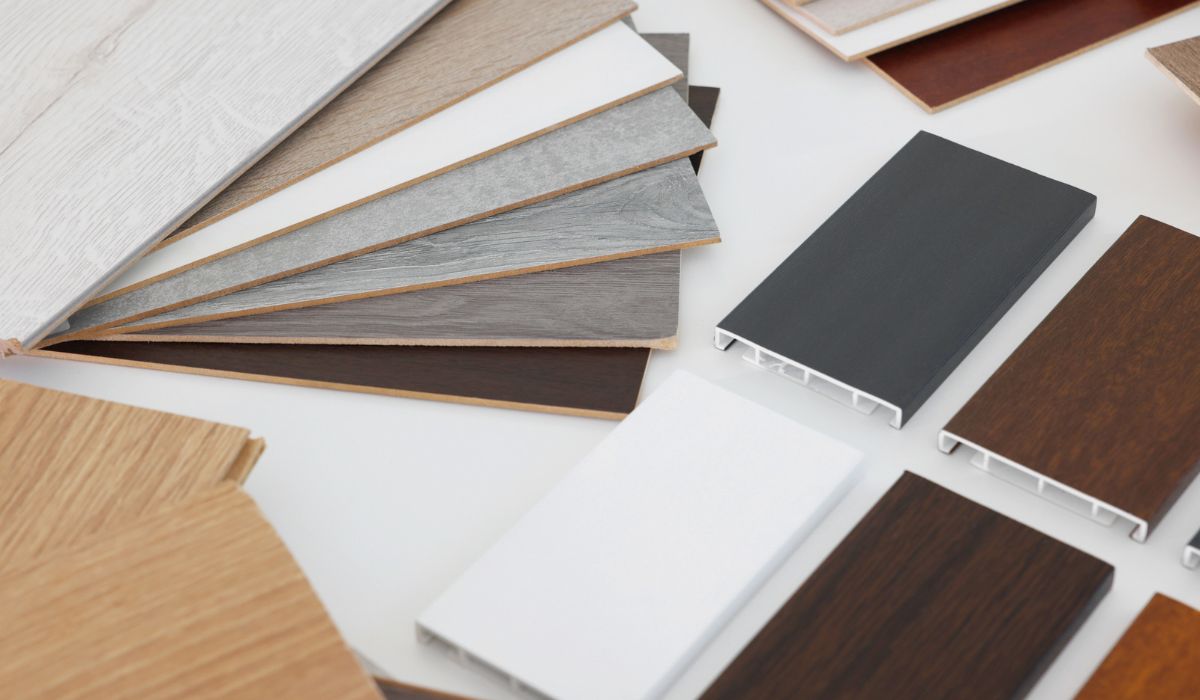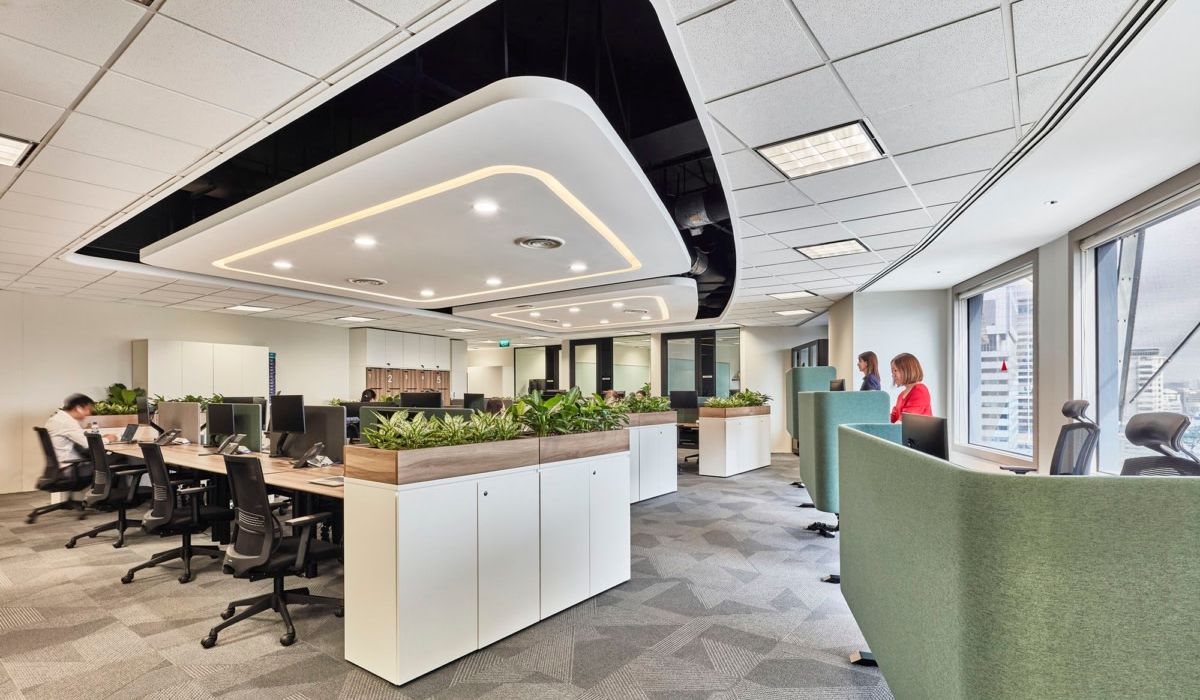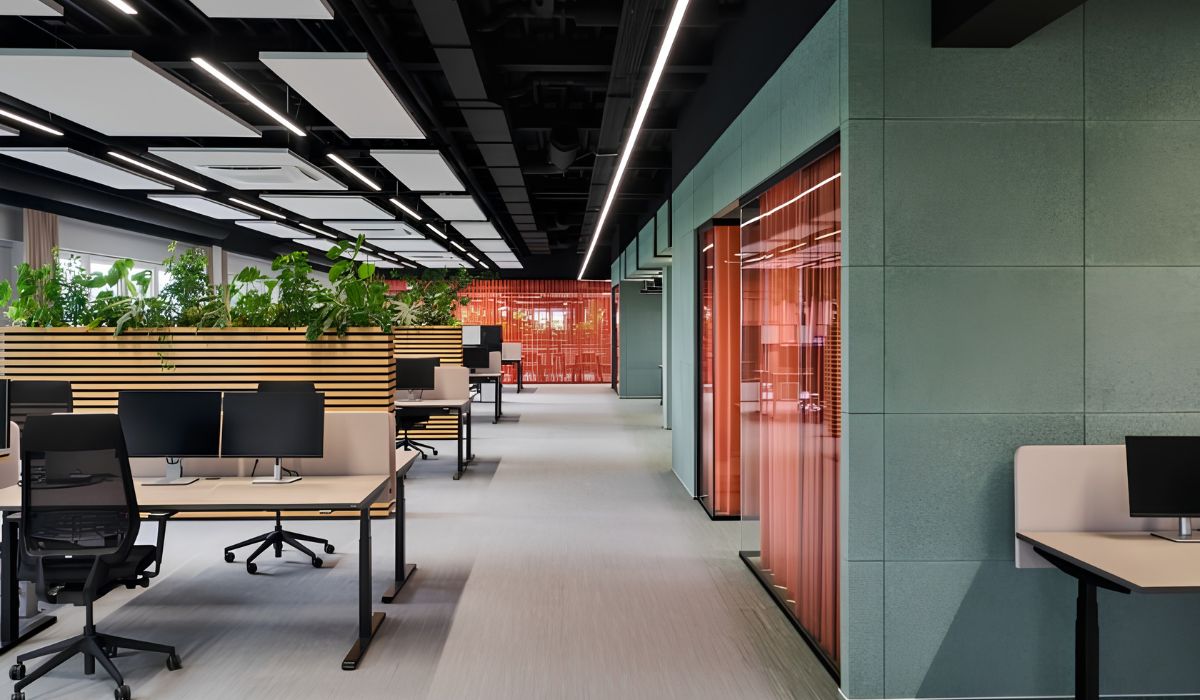
Sound-absorbing materials help reduce echo in offices, particularly in meeting rooms and work areas with many hard surfaces. The right material depends on how the space is used and how the material will be installed. Acoustic performance also depends on the area treated and the product’s sound absorption properties.
1. What Are Sound-Absorbing Materials?
Sound-absorbing materials absorb some sound energy and reduce sound reflections in a room. They often have a fibrous or open-cell structure, or a perforated surface backed by an absorptive layer. In offices, these materials are installed on ceilings, walls, and other surfaces where sound reflections need to be reduced.
2. Types of Sound-Absorbing Materials Used in Offices
Office sound-absorbing solutions include both core materials and finished products. Mineral wool or glass wool, for example, can be used inside fabric-wrapped panels, behind perforated panels, or within partitions. When comparing options, distinguish the component material from the complete assembly after installation.
2.1. Perforated Acoustic Gypsum Board
Perforated gypsum board has a patterned surface and is often paired with acoustic paper or a membrane at the back. It is used for ceilings and partitions where a finish coordinated with the interior design is required.
Sound absorption depends on the perforation pattern and the installation assembly. During finishing, keep the perforations open and follow the manufacturer’s painting instructions. Paint or joint compound that blocks the holes can affect acoustic performance.
2.2. Mineral Wool and Glass Wool
Mineral wool and glass wool have fibrous structures with many air pockets. They are commonly used as absorptive layers in ceiling and partition systems or fabric-wrapped panels. Both materials are available in various specifications, so check the thickness, product properties, and intended assembly.
For acoustic panels exposed to the room, the facing fabric must suit the acoustic assembly and keep the material in place. Wool installed inside an enclosed partition serves a different purpose from a wool panel with its absorptive face exposed to the room. Assess the facing or covering as part of the full assembly to determine its sound absorption performance.
2.3. Acoustic Foam
Acoustic foam typically has an open-cell structure and may be made from materials such as polyurethane or melamine. It can have a flat or profiled surface and be cut into acoustic treatment panels.
Thickness and material structure affect the frequencies absorbed. Evaluate performance using product specifications rather than the foam’s egg-crate or wedge shape. For office use, also check fire performance, durability, and cleaning requirements.
2.4. PET Polyester Acoustic Panels
PET panels are made from polyester fibers and can be fabricated as wall panels, decorative partitions, or suspended elements, depending on the product design. Their ability to be cut into different shapes and colors suits offices where acoustic treatment needs to coordinate with the interior finish.
Sound absorption data varies with panel thickness and the air gap behind it. Polyester content and recycled material content should be reviewed separately. Claims about emissions or fire safety should also be supported by the relevant product documentation.
2.5. Perforated and Slotted Wood Acoustic Panels
Wood acoustic panels typically have perforated or slotted surfaces combined with an acoustic backing and a cavity behind them, as specified in the design. They may be finished with veneer or other coatings, making them suitable for meeting rooms and reception areas where a consistent wood finish is desired.
Businesses should check the perforation ratio, cavity depth, and any additional absorptive layer. For decorative wood surfaces with gaps, sound absorption should also be determined from the actual assembly.
See also: Types of Wood Commonly Used in Office Design
2.6. Fabric-Wrapped Acoustic Panels
Fabric-wrapped acoustic panels consist of a sound-absorbing core and a finished fabric layer. Depending on the product, they may also include a frame or mounting system. The core may be fibrous material or another material tested as part of the complete panel assembly.
The fabric must allow sound to pass through to the absorptive core. Check the fabric type, panel thickness, and mounting method. Replacing the fabric or adding a coating can make the installed assembly different from the one tested.
2.7. Mineral Fiber Acoustic Ceiling Tiles
Mineral fiber ceiling tiles are finished products for ceiling systems. They may be made from stone fibers or other mineral fiber components and should be distinguished from mineral wool used as a core material. For suspended ceilings, select tiles that are compatible with the grid and installation assembly.
Businesses should distinguish finished ceiling tiles from mineral wool used as a core. When choosing a product, check its sound absorption performance, moisture conditions, and replacement instructions. In offices where several rooms share a ceiling plenum, consider separately how well the system limits sound travelling through that plenum.
3. Comparing Sound-Absorbing Materials for Offices
Each material group has different finishing and installation requirements. Businesses should first identify which type suits their needs, then compare the documentation for specific products.
| Material | Advantages | Points to Consider | Applications |
|---|---|---|---|
| Perforated gypsum board | Coordinates with ceiling and partition finishes | Keep perforations open | Meeting room ceilings and partitions |
| Mineral wool and glass wool | Flexible placement of the absorptive layer | Use a suitable facing | Panel cores; behind perforated panels |
| Open-cell foam | Lightweight and easy to fabricate | Check fire performance and cleaning requirements | Localized acoustic treatment |
| PET panels | Available in many colors and easy to shape | Check thickness and installation method | Walls, partitions, and suspended panels |
| Perforated and slotted wood | Coordinates with wood finishes | Check the cavity behind the panel | Meeting rooms and reception areas |
| Fabric-wrapped panels | Flexible in color and size | Check the fabric, core, and mounting system | Walls and decorative partitions |
| Mineral fiber ceiling tiles | Integrate with the ceiling system | Check specifications for each product line | Ceilings in work areas and meeting rooms |
Sound absorption data should be compared using the same test method and installation assembly. Panels made from the same material can produce different results when thickness, backing layers, or air gaps vary.
4. How Sound-Absorbing Materials Work
In fibrous or open-cell materials, sound waves cause air to move through the pores. The interaction between the air and the material structure reduces sound energy, while also converting some of it...
Perforated or slotted panels are usually installed with a backing material and an air cavity. Sound absorption depends on hole size, perforation ratio, cavity depth, and any additional material. Businesses should assess the entire assembly to determine acoustic performance.
5. Sound Absorption vs. Sound Insulation
Businesses should identify whether they need clearer speech within a room or greater privacy between rooms before choosing a suitable solution.
| Sound Absorption | Sound Insulation | |
|---|---|---|
| Main purpose | Absorbs sound and reduces reflections in a room, helping reduce echo and improve speech intelligibility | Limits sound transmission between spaces |
| Problem addressed | Speech reflecting off glass walls, ceilings, or hard floors | Speech carrying into an adjacent room and affecting privacy |
Sound insulation performance depends on the construction of walls, ceilings, and doors, as well as junctions between building elements and sound paths through building services. Wall-mounted acoustic panels are generally insufficient to prevent speech from carrying into an adjacent room.
Meeting rooms may require both sound absorption and sound insulation. When choosing an office sound insulation system, businesses should consider speech intelligibility within each room and privacy between rooms.
6. Applications of Sound-Absorbing Materials in Office Design
Where to install sound-absorbing materials depends on the sound sources, reflective surfaces, and how each area is used.
6.1. Open-Plan Offices and Shared Work Areas
Shared work areas often need to reduce reflections from multiple conversations taking place at the same time. Suitable acoustic ceilings or suspended panels can be installed above work areas. Wall panels can be added where reflections need to be reduced.
When selecting desk dividers with sound-absorbing layers, consider their height, placement, and the seating layout. To manage noise between teams, material selection should be coordinated with zoning and spacing between activities.
6.2. Meeting Rooms and Conference Rooms
Meeting rooms with extensive glazing or hard walls can generate sound reflections that make speech difficult to understand. To improve speech intelligibility, fabric-wrapped panels, PET panels, or perforated panel systems can be placed on suitable surfaces, depending on the design requirements.
Two requirements should be considered alongside sound absorption:
- Video conferences: Coordinate acoustic treatment with microphone and speaker positions and equipment settings.
- Conversation privacy: Also check the construction of walls, ceilings, and doors, as well as sound paths.
6.3. Phone Booths and Focus Rooms
In a phone booth, interior acoustic layers help reduce short-distance sound reflections. PET or fabric-wrapped panels should be selected to suit the construction and dimensions of each booth. The appropriate material thickness should be considered for each application.
The door, airtightness, and ventilation system also affect how well a phone booth performs. When the booth is in use, businesses should check:
- Speech intelligibility inside the booth.
- The amount of sound travelling from the booth to the outside.
- Ventilation inside the booth.
6.4. Reception Areas, Pantries, and Collaboration Spaces
Reception areas, dining areas (pantries), and collaboration spaces often have multiple sound sources and changing occupancy levels. Where hard flooring is needed for easier cleaning, consider suspended ceiling panels or sound-absorbing wall sections.
Near dining areas, choose material surfaces that suit the planned cleaning method. An office acoustic treatment plan should also account for the layout of reception areas and quiet work areas.
7. How to Choose Sound-Absorbing Materials for an Office
Choose sound-absorbing materials based on the acoustic problem and the actual installation assembly. Product documentation provides the basis for comparing performance, conditions of use, and total cost before finalizing a solution.
7.1. Identify the Need and Frequency Range to Address
Before selecting materials, determine whether the problem is echo, speech travelling between rooms, or noise from equipment. The assessment method should suit the sound source and treatment objective. If the cause is unclear, an acoustic survey can help define the treatment area and the frequency range to address.
Combining materials may meet the needs of different surfaces or areas within the same office. The number of material types and how they are combined should be based on the treatment objectives and assessment results.
7.2. Read the NRC Rating and Test Report
The Noise Reduction Coefficient (NRC) is calculated as the average of the sound absorption coefficients at 250, 500, 1,000, and 2,000 Hz. The result is rounded to the nearest multiple of 0.05. To determine whether a product suits the frequency range being addressed, also review its absorption coefficients at individual frequencies. The test report should cover the exact product and intended installation method:
- Test specimen: Product code and thickness.
- Test method: Applicable standard and specimen mounting method.
- Backing assembly: Substrate and air gap.
- Results: Sound absorption coefficients by frequency and the units for the reported measurement.
Performance in use should be assessed against the actual assembly, installed area, and characteristics of the space. NRC does not represent the percentage reduction in noise across an entire room. For individual suspended objects, results may be reported as the equivalent absorption area per object.
7.3. Check Thickness, Backing Layers, and Installation Method
The thickness, air cavity, and backing material should match the assembly evaluated in the product documentation. A panel mounted directly against a wall may perform differently from one installed with an air gap. When assessing low-frequency sound treatment, consider density alongside thickness, material properties, and the complete assembly.
Determine the treatment area for each room based on its characteristics and acoustic objectives. For suspended ceiling panels, coordinate fixing points and installation clearances with lights, air vents, and fire protection equipment. The layout should also allow access for maintenance.
7.4. Check Fire Safety and Material Emissions
The choice of finish materials should reflect their installation location, function, and the regulations applicable to the project. Where applicable, check against QCVN 06:2022/BXD and Amendment 1:2023.
Fire safety documentation should specify the test standard, product classification, and scope of use. When reviewing the documentation, distinguish between the following types of information:
- Fire classification: Check the A or B rating alongside the relevant test standard.
- Sound absorption classification: Review this separately from reaction-to-fire classification.
- Emissions: Check documentation for the specific panel, coating, and adhesive being used.
- Material composition: Separately verify recycled content, polyester composition, and emissions results for the specific product.
7.5. Consider Appearance, Durability, and Maintenance
View material samples under the expected lighting conditions and in the context of the overall interior. In areas subject to frequent impact, check the surface properties, edge protection, and replacement options.
A maintenance plan should specify how to vacuum the panels, treat stains, and access them for cleaning or replacement after installation. For areas with high humidity or stringent cleaning requirements, check the manufacturer’s stated conditions of use before selecting a product.
7.6. Compare the Total Cost of the Same Assembly
Total cost includes the finished panel, any additional absorptive layer, the frame or mounting components, labor, and expected maintenance costs. When comparing quotations, use consistent quantities, assemblies, and pricing scopes. Distinguish clearly between the unit price of a panel and the price of the complete system.
In office design and construction, define the material assembly alongside the interior design solution before finalizing quantities. To check that delivered products match the approved solution, procurement documents should specify:
| Check | Reference Documents | Points to Clarify |
|---|---|---|
| Product | Product schedule, approved sample | Product code, thickness, surface finish |
| Sound absorption | Test report | Test method, frequencies, reported units |
| Assembly | Drawings, installation instructions | Substrate, air gap, mounting components |
| Safety | Fire and emissions documentation | Correct product and scope of use |
| Maintenance | User instructions | Cleaning method, replacement, panel access |
| Cost | Quotation, bill of quantities | Same assembly and complete scope of work |
See also: How to Account for Office Interior Construction Costs in Detail
8. Common Mistakes When Choosing and Installing Sound-Absorbing Materials
Before placing an order, businesses should clearly define their acoustic treatment needs and compare product documentation with the intended installation assembly. This helps avoid the following mistakes:
- Confusing sound absorption with sound insulation: Choosing sound-absorbing panels to stop speech from travelling between rooms.
- Comparing NRC ratings without checking conditions: Comparing results while overlooking differences in test specimen assemblies.
- Choosing by name or appearance: Selecting a material based on its name or shape without checking the product documentation.
- Changing an evaluated assembly: Using a different thickness, backing material, or finish from the tested specimen.
- Applying one coverage ratio to every space: Setting material quantities without considering the characteristics of each room.
- Using documentation for a different product: Approving materials based on fire or emissions documents that do not match the selected product.
- Overlooking long-term use requirements: Choosing a material that does not suit the space’s function, durability requirements, or cleaning method.
- Installing without sufficient assessment: Failing to clarify existing conditions and acoustic assessment needs, which can lead to additional materials or removal work.
Select sound-absorbing materials to address the actual problem, using documentation that matches the intended installation assembly. Defining the solution before procurement gives businesses a basis for checking the materials and installation quality. The acoustic results should be assessed against the requirements agreed for each space.
9. Frequently Asked Questions
9.1. Can Acoustic Panels Be Attached to a Painted Wall?
Yes, if the product is approved for direct application and the substrate meets the installation instructions. Check that the paint is well bonded and that the surface is dry and clean. The adhesive must be compatible with both the panel and substrate. Peeling or damp walls should be treated before installing the panels.
9.2. Can the Surface of Sound-Absorbing Materials Be Repainted?
It depends on the product. Some perforated gypsum boards can be painted according to specific instructions, while keeping the perforations open. For PET or fabric-wrapped panels, confirm color-change options with the manufacturer. An added paint layer can change the surface properties and the tested assembly.
9.3. Can Acoustic Panels Be Cleaned with Water?
Cleaning methods depend on the surface and core. Some panels can be wiped with a damp cloth or spot-cleaned, while using too much water may affect the finish or adhesive. Test the method in an inconspicuous area and follow the manufacturer’s cleaning instructions.
9.4. Can Acoustic Panels Be Removed and Reused When Relocating an Office?
Yes, if the system is designed for disassembly and the panels remain suitable for use. Adhesive-mounted panels may be harder to remove intact than panels with an appropriate mechanical fixing system. Before moving them, check the removal instructions, panel condition, and whether they can be reinstalled in the new location.
9.5. Can Individual Damaged Acoustic Panels Be Replaced?
Yes, if the assembly allows access to and removal of individual panels. Check the mounting system, dimensions, and replacement product code. New panels may differ in color from those already installed. For seamless finishes, repairs may also need to cover adjacent areas.