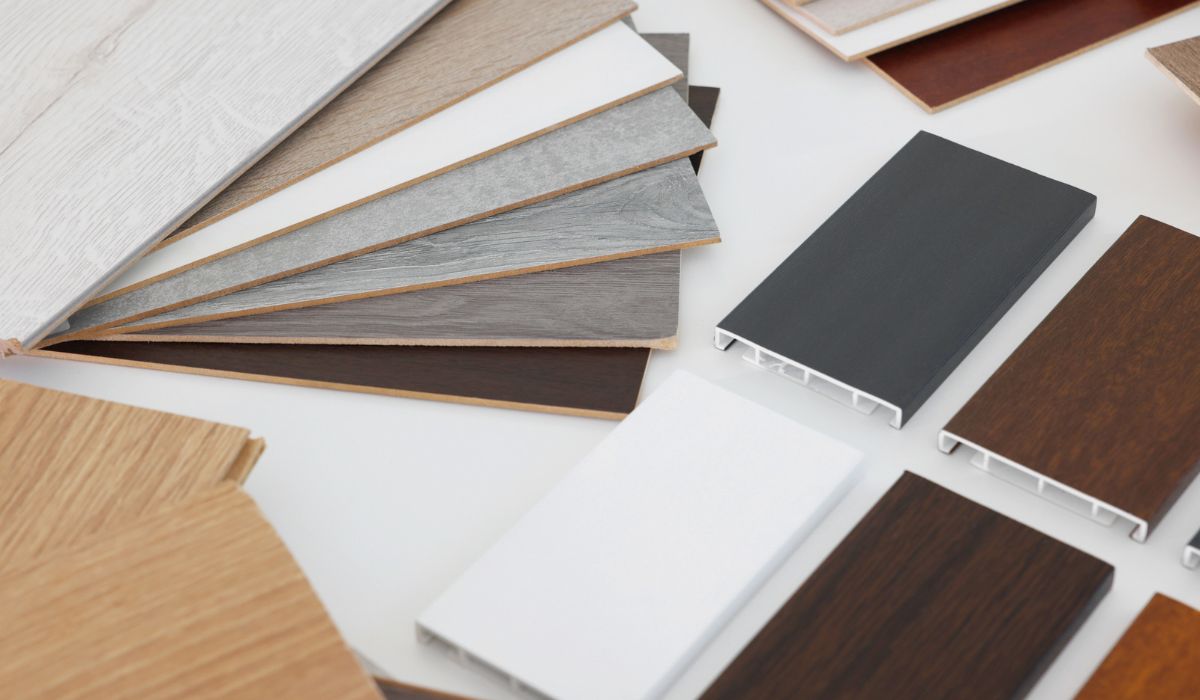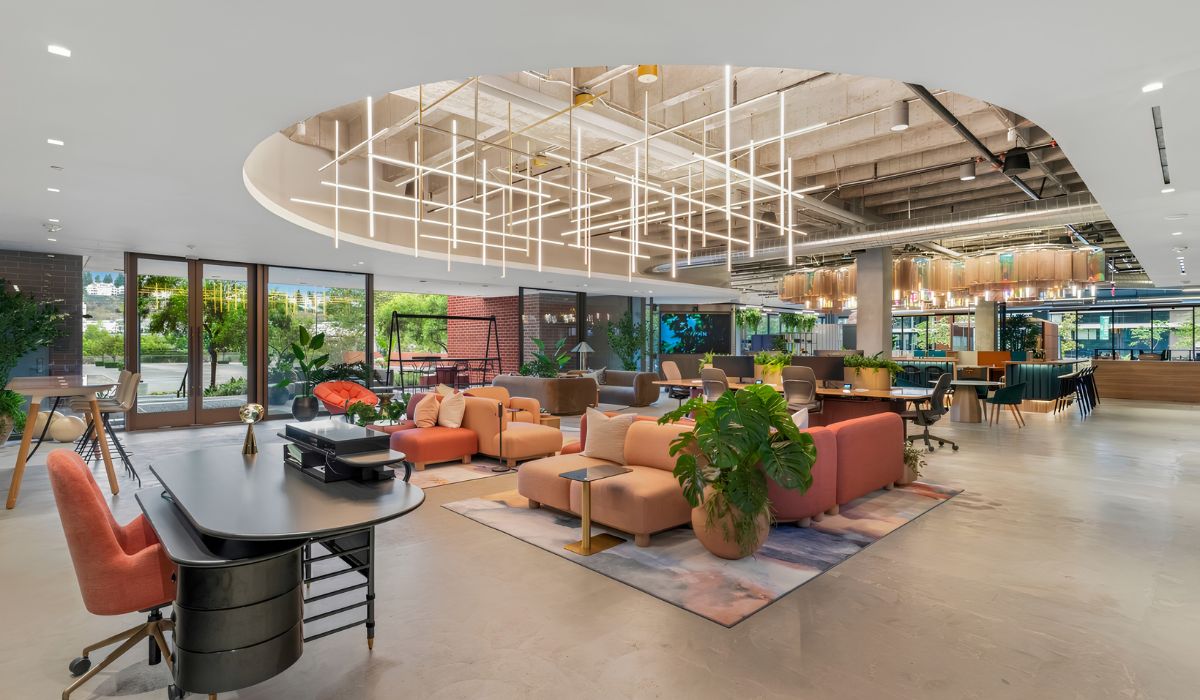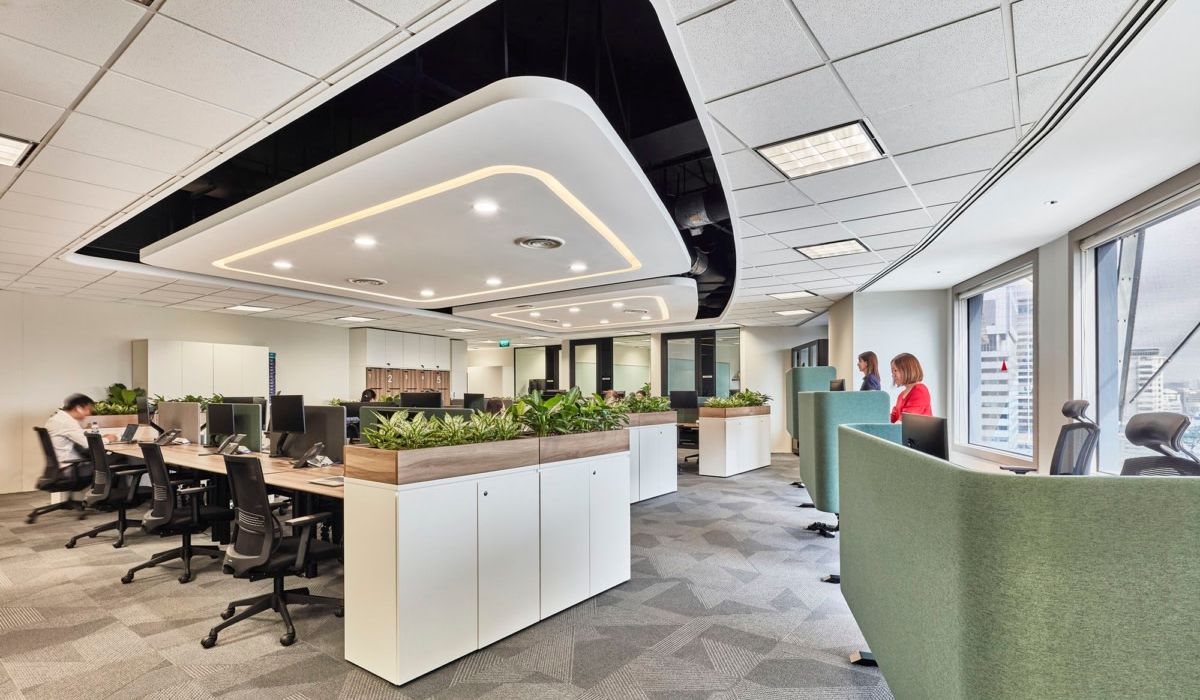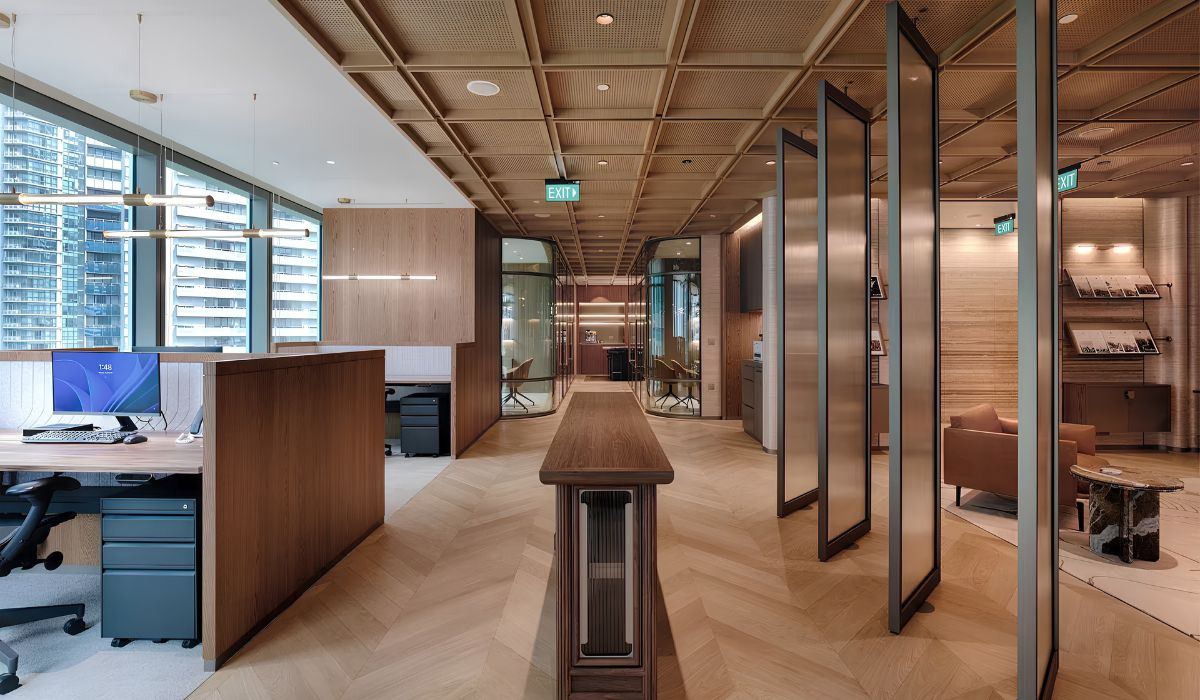
Engineered wood is commonly used for office desks, filing cabinets, reception counters, and wall cladding. Two samples with the same color and wood grain can still differ in their core material, moisture resistance, and fabrication requirements. Businesses can select board cores and surface finishes according to load, humidity, and frequency of use.
1. What is engineered wood?
Engineered wood is a group of materials manufactured by bonding wood particles, wood fibers, or layers of veneer into boards. Each board type has different properties and applications depending on its raw materials and manufacturing process. The surface can be left unfinished, covered with a decorative material, or painted to suit its intended use.
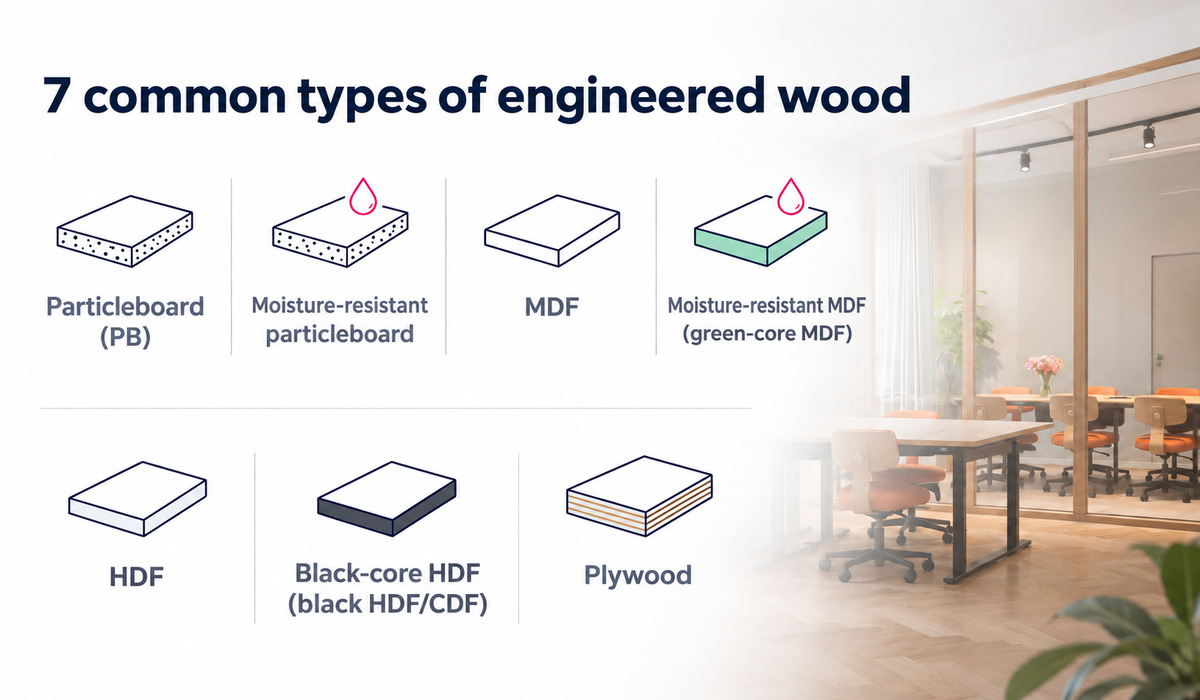
2. 7 common types of engineered wood
Engineered wood comes in various types with different structures, properties, and applications. Understanding each board type helps businesses select suitable materials for office desks, storage cabinets, decorative partitions, and other office furniture.
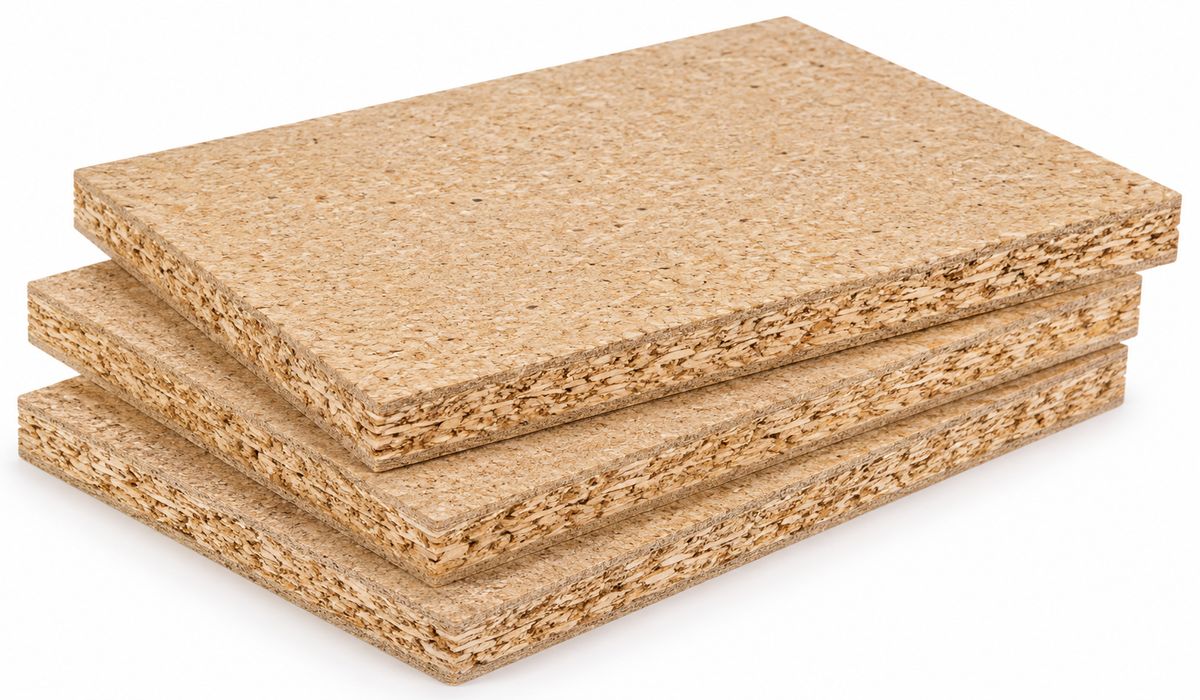
2.1. Particleboard (PB)
Particleboard is manufactured by bonding wood particles with adhesive and pressing them into boards. The melamine-faced version is commonly known as MFC and is widely used for office desks, filing cabinets, and interior partitions. For load-bearing components such as storage shelves, board thickness and support spacing must be selected appropriately.
2.2. Moisture-resistant particleboard
Moisture-resistant particleboard is manufactured for use in environments with higher humidity than normal indoor conditions. It can be used for pantry cabinets or furniture in areas with fluctuating humidity. When selecting this material, check its moisture-resistance grade and ensure that board edges are carefully sealed, particularly near water sources.
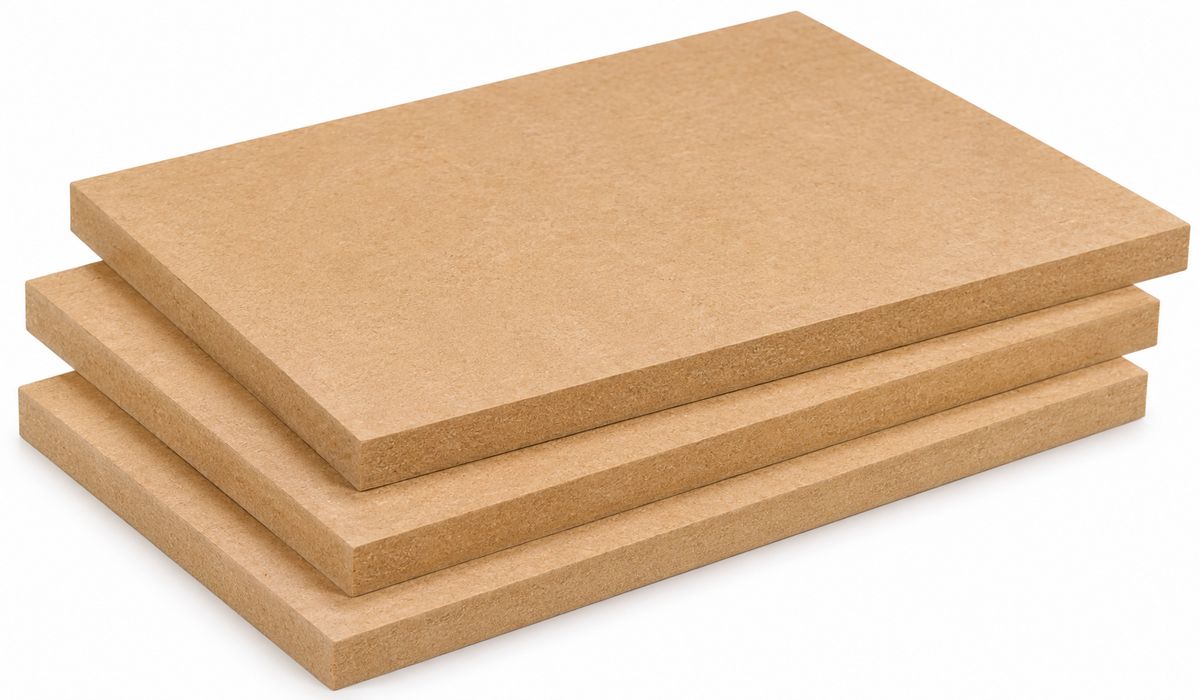
2.3. MDF
MDF is manufactured by bonding wood fibers with a binder and pressing them into medium-density boards. Its flat, smooth surface and ease of machining make it suitable for painted cabinet doors, decorative partitions, and routed details. Standard MDF is suitable for dry areas, and its edges require treatment after machining.
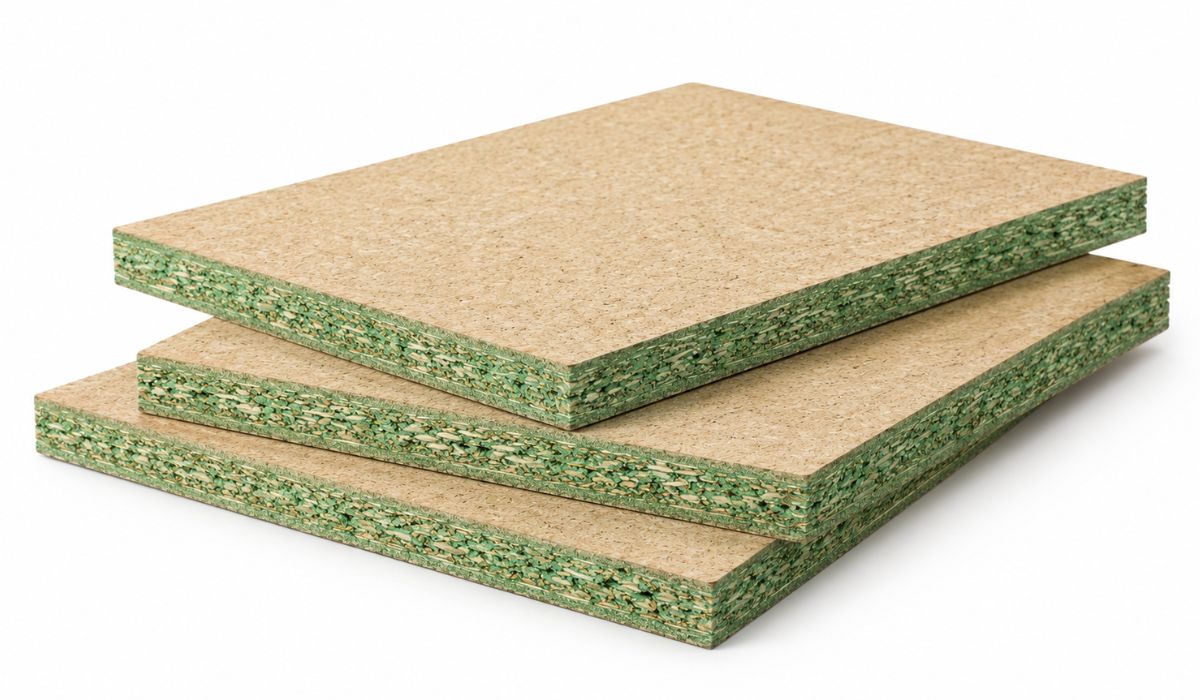
2.4. Moisture-resistant MDF (green-core MDF)
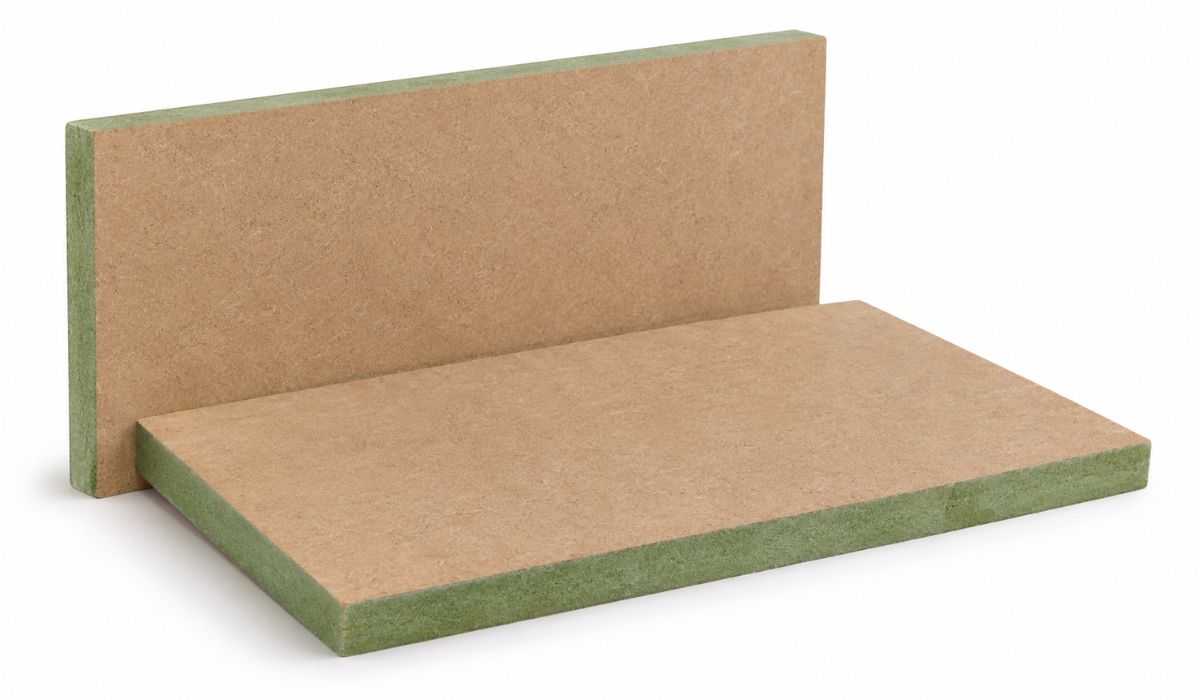
Moisture-resistant MDF is designed for higher-humidity conditions than standard MDF while retaining a smooth surface suitable for painting and machining. It is suitable for pantry cabinets and furniture in areas with fluctuating humidity. A green core is often used to identify the product, but moisture resistance must be confirmed through its technical specifications.
2.5. HDF
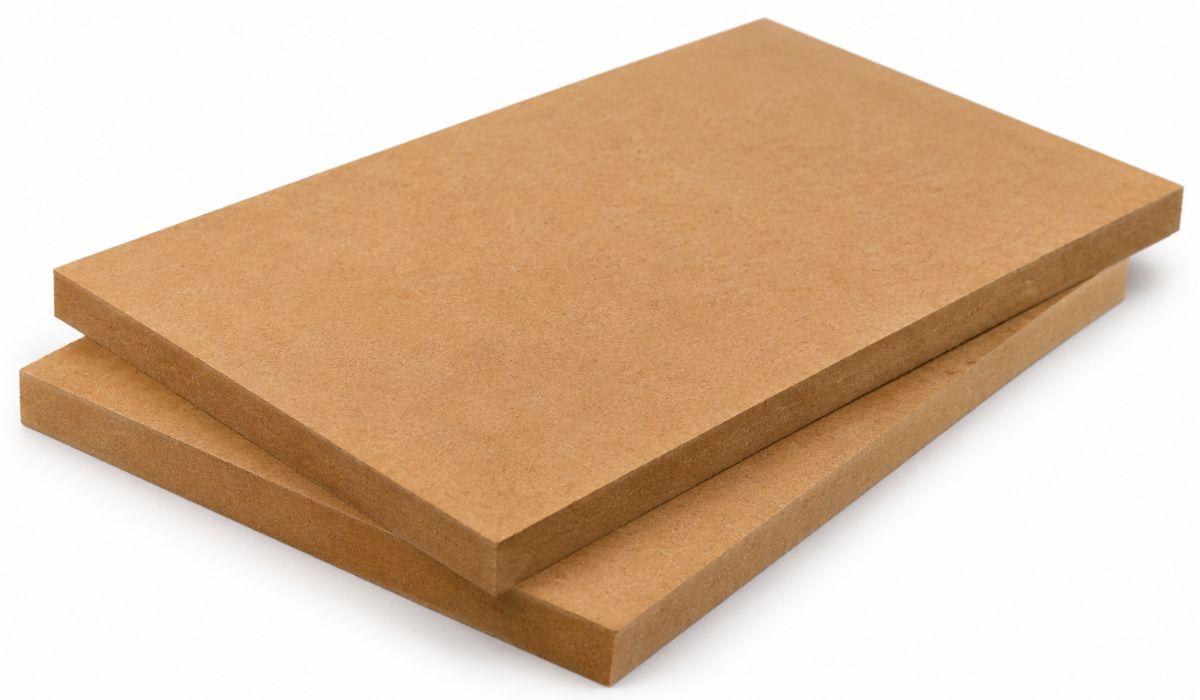
HDF is high-density fiberboard with a dense structure and a relatively smooth surface. It is used in certain interior doors, flooring products, and applications that require a high-density board core. Businesses should check the board specifications and grade against its intended use. Comparing MFC, MDF, and HDF can help distinguish their respective characteristics.
2.6. Black-core HDF (black HDF/CDF)
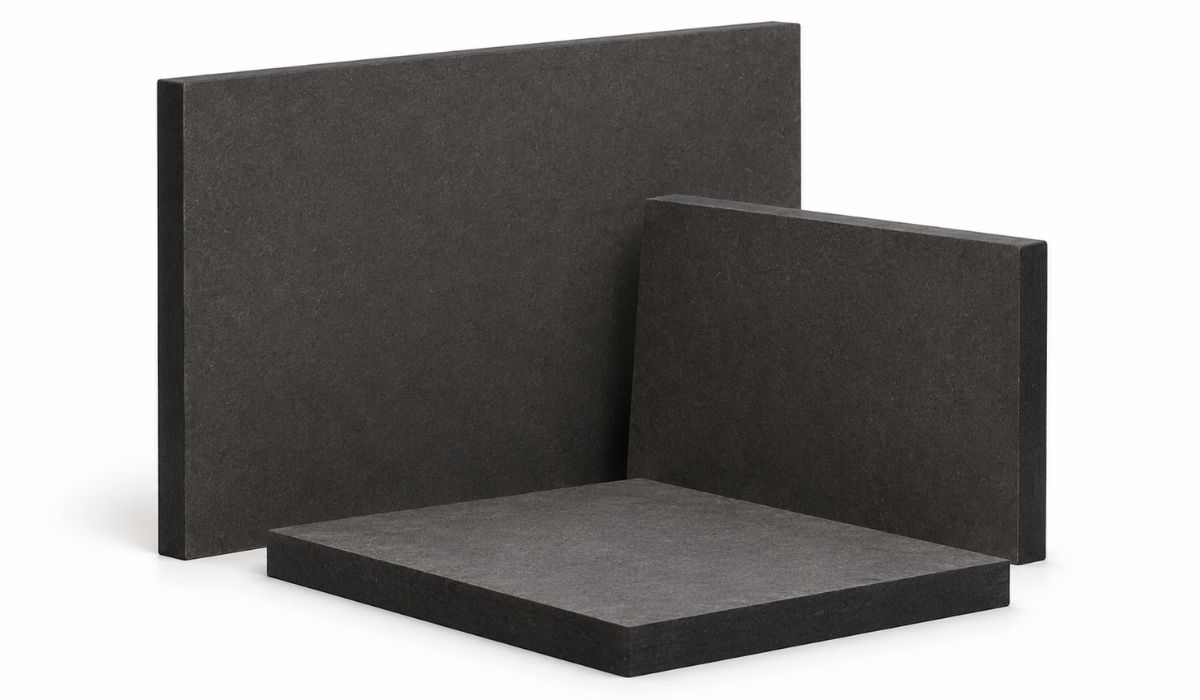
Black HDF and CDF are high-density fiberboard products with black cores. They are commonly used for decorative partitions, reception counters, and furniture details with exposed edges. The core color creates a visual accent when grooves are machined into the board or when it is combined with other surface finishes. Moisture resistance and technical properties must be checked for each product range.
2.7. Plywood
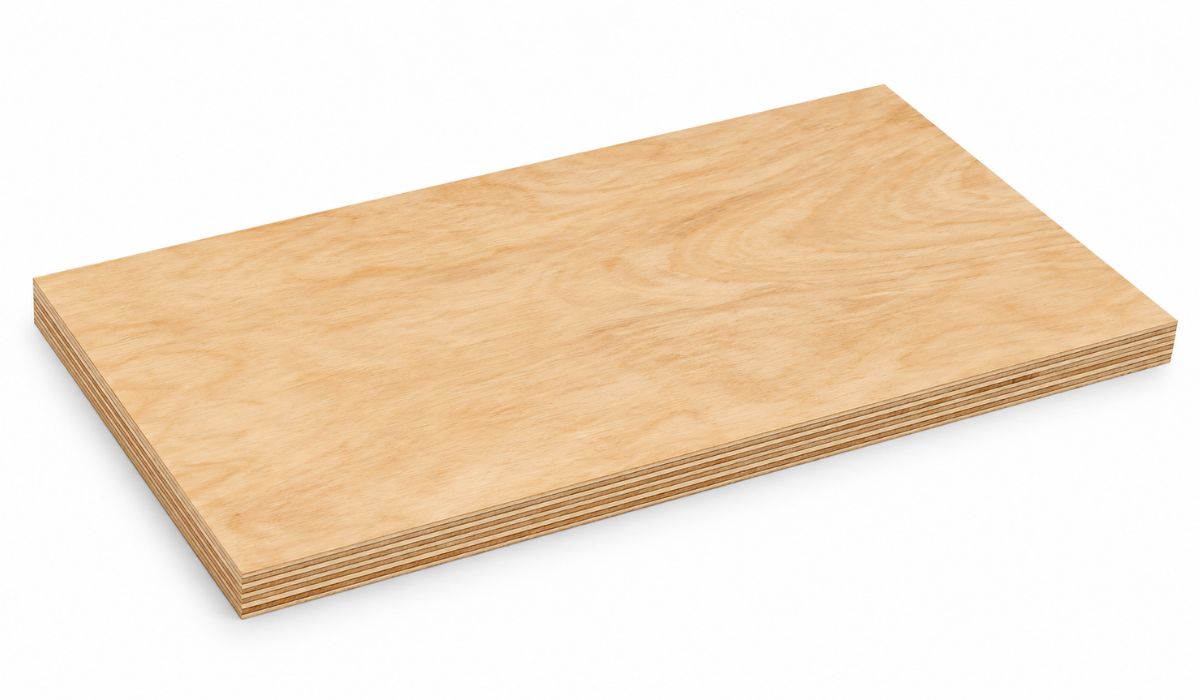
Plywood consists of multiple layers of wood veneer bonded together, usually with alternating grain directions to improve panel stability. It can be used for filing cabinets, storage shelves, and furniture components requiring screw connections. When selecting plywood, consider its grade, thickness, and load-bearing capacity in relation to the intended application.
3. Common surface finishes for engineered wood
Surface finishes affect the color, appearance, and ease of cleaning of engineered wood. Businesses can select suitable finishes according to the installation location and usage requirements. Four common surface finishes used in office interiors are:
| Surface finish | Characteristics | Common applications |
|---|---|---|
| Melamine | Available in various colors, wood grain patterns, and finishes. Easy to clean and suitable for everyday furniture. | Office desks, drawer pedestals, filing cabinet carcasses. |
| Laminate | Available in various designs and product ranges with different levels of scratch and abrasion resistance. | Meeting table tops, reception counters, pantry countertops. |
| Acrylic | A smooth surface available in high-gloss or matte finishes for a modern appearance. | Cabinet doors, reception counter fronts, decorative furniture. |
| Veneer | A thin layer of natural wood that retains the wood’s distinctive grain and color. | Decorative wall cladding, reception counters, meeting room furniture. |
4. Advantages and disadvantages of engineered wood
When assessing engineered wood, consider the board core, surface finish, and installation method. For desktops, the finish affects scratch resistance and cleaning requirements. For filing cabinet shelves, deflection depends largely on the core type, board thickness, and support spacing.
4.1. Advantages of engineered wood
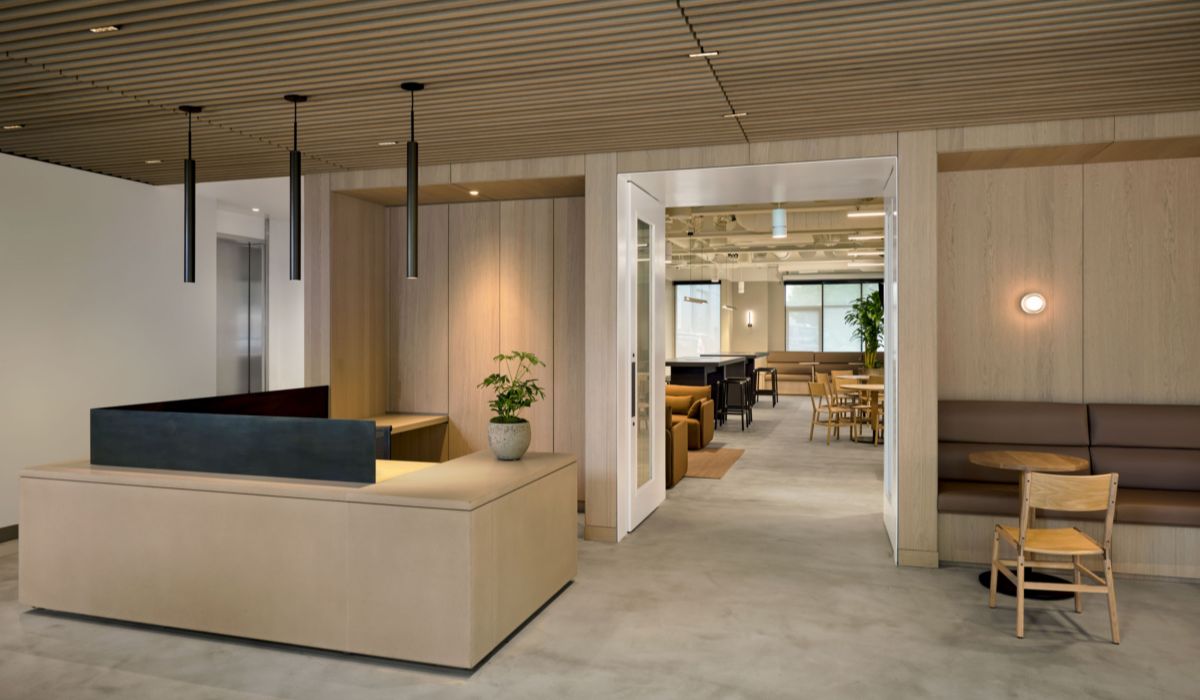
Engineered wood offers advantages when drawings specify multiple components with identical dimensions or when several finishes need to be coordinated within the same furniture system.
- Easy to machine: Standard panel formats allow cutting paths and drill holes to be planned according to the drawings.
- Flexible shaping options: MDF cores are suitable for rounding edges, routing handle grooves, and creating decorative grooves on cabinet doors.
- Varied surface options: Colors, grain patterns, and gloss levels can be selected according to the design and cleaning frequency.
4.2. Disadvantages of engineered wood
Limitations often become apparent at board edges, screw connections, and components subjected to sustained loads. When reviewing a proposal, examine a fabricated sample alongside the installation drawings to assess areas exposed to direct wear or stress.
- Potential swelling: Water entering through cut edges, drilled holes, or joints can cause the board core to swell.
- Potential sagging: Long shelves under sustained loads may require additional supports or vertical dividers.
- Variable screw-holding strength: Connection strength depends on the board core, screw type, and fixing location.
- Difficult color matching during repairs: Deep chips expose the core. Repairs may differ in color, grain, or gloss.
If the design combines solid wood and engineered wood, businesses can compare the characteristics of wood types used in offices before selecting materials for individual components.
5. Why choose engineered wood boards for office interiors?
Engineered wood is widely used in office interiors because it offers varied designs, is easy to machine, and suits many furniture applications. For office projects requiring large quantities of desks, filing cabinets, or drawer units, it supports consistent production in terms of dimensions, colors, and surface finishes.
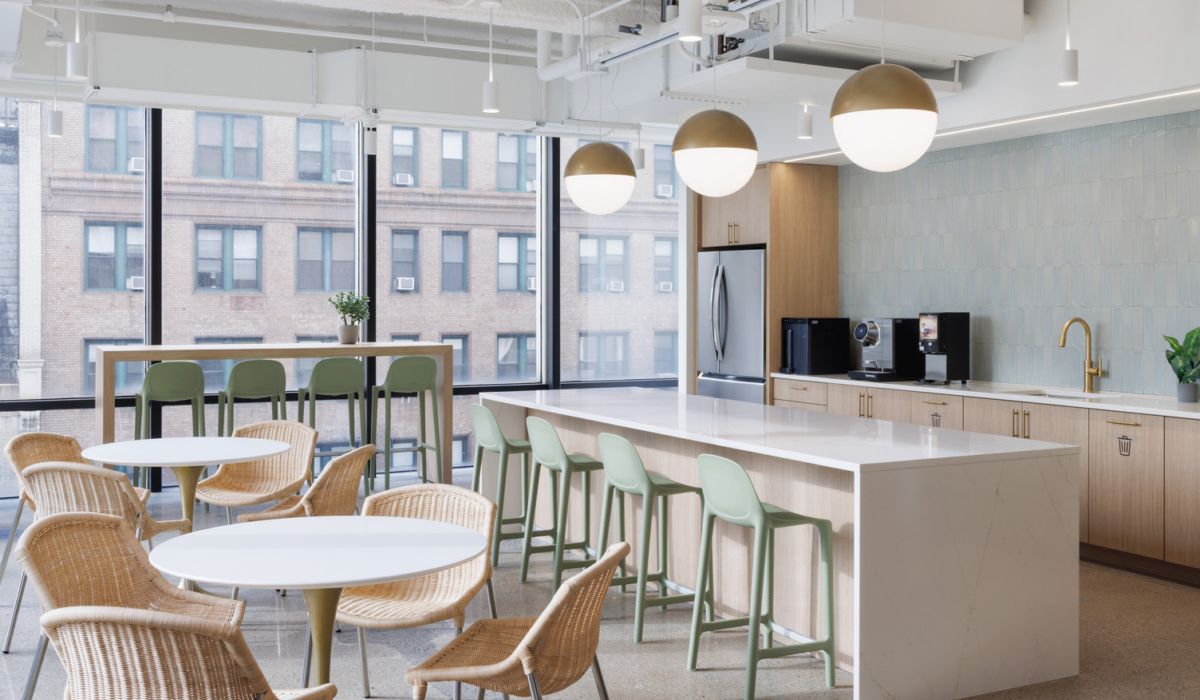
Engineered wood also suits offices that need to expand or change their furniture layouts. Modular desk and cabinet systems can make it easier to add or replace individual components. Their adaptability depends on product construction, connecting hardware, and material availability.
6. How to choose engineered wood for different office applications
Desktops used daily require surfaces suited to regular cleaning. Filing shelves depend more heavily on their loads and support spacing. The table below suggests options for each application and identifies details to check before making a selection.
| Application | Usage conditions | Board core and surface finish | Details to check |
|---|---|---|---|
| Office desks | Daily use, with equipment and cable openings. | Particleboard or MDF with a melamine or laminate finish. | Support spacing, desk edges, and edges around cable openings. |
| Meeting tables | Long tabletops that may have panel joints and power outlet cutouts. | MDF or plywood with a laminate or veneer finish. | Support frame, panel joints, and cutout edges. |
| Filing cabinets | Shelves subjected to sustained loads. | Melamine-faced particleboard or plywood with a suitable finish. | Expected load, shelf span, and support locations. |
| Reception counters and wall cladding | Colors and grain directions must be consistent with the design. | MDF with a laminate, acrylic, or veneer finish. Consider black-core boards for exposed-edge details. | Color under actual lighting, grain direction, and joint edges. |
| Pantry cabinets in dry areas | Fluctuating humidity with limited direct water exposure. | Moisture-resistant particleboard or MDF with a melamine or laminate finish. | Board grade, joints, and edge-banding details. |
| Pantry cabinets next to sinks | Potential exposure to splashes or leaks. | Plywood of a suitable service grade, with an easy-to-clean surface and sealed cut edges. | Edges around the sink, pipe penetrations, and areas where water may collect. |
7. Criteria for approving engineered wood samples for offices
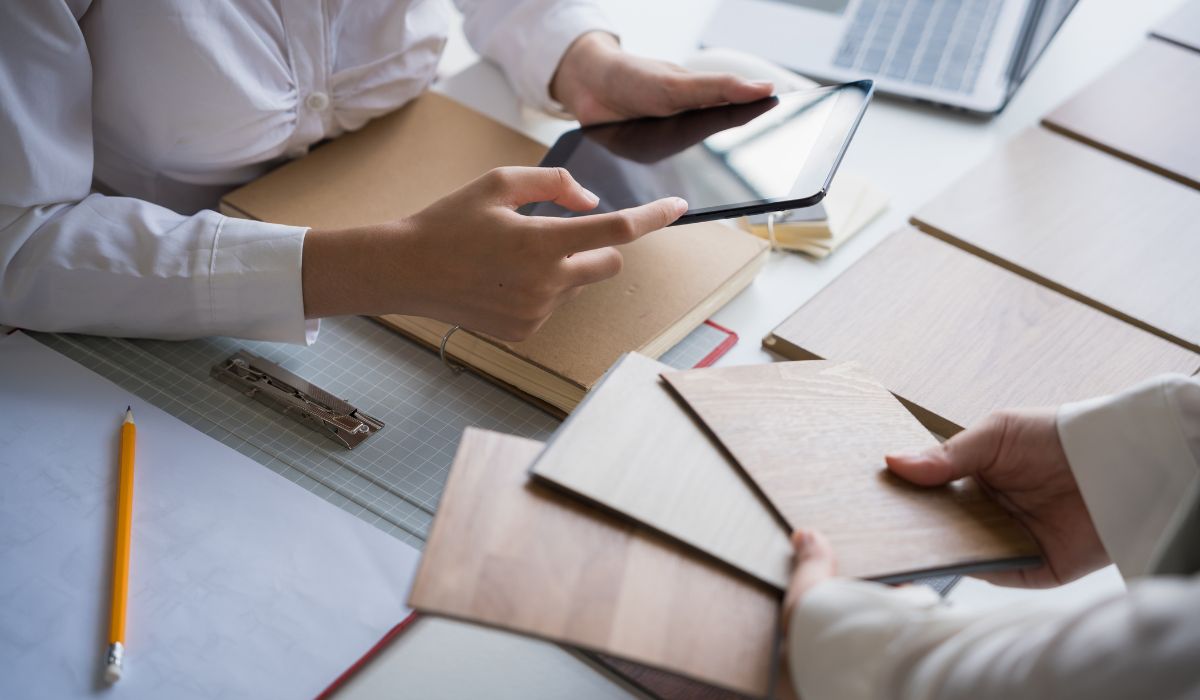
Approval samples should show both the surface finish and edge details. When samples are accompanied by product codes, technical documentation, and quotations matching the specified construction, businesses can check the proposed materials from ordering through to inspection of the installed furniture.
7.1. Board core codes, surface finishes, and edge-banding details
Record the board core code, thickness, surface finish code, and edge-banding specifications in the project documentation. For desktops with power outlet cutouts or cabinets with pipe penetrations, review the edge treatment around these openings. For wood grain surfaces, a sample showing two adjoining panels helps assess grain direction and joint visibility.
7.2. Technical documentation and formaldehyde emissions test results
Technical data sheets help establish the intended applications of a specific board product and relevant properties, such as thickness swelling or bending strength. When reviewing formaldehyde emissions test results, check the product name, test method, results, and measurement units. Designations such as E0, E1, and E2 must be interpreted according to the standard stated in the documentation.
7.3. Quotations and replacement costs
Compare quotations based on the same board core, surface finish, edge banding, hardware, and installation scope. For frequently used cabinet runs or desk clusters, review how individual components can be removed and replaced. The cost of replacing a panel depends on access to its installed location, fabrication requirements, and the availability of the specified material.
8. Proper use and cleaning of engineered wood boards
Desktops and cabinet doors are often wiped directly, while water can collect in joints and around cutouts. Cleaning methods should account for both the surface finish instructions and areas where water could enter the board core.
8.1. Protect board edges and areas exposed to water
Immediately wipe up spills at desk edges, countertop joints, or the bases of pantry cabinets. If water is found beneath a sink, inspect the pipe connections and fix the leak before continuing to use the cabinet. If edge banding becomes detached, check the condition of the board core to determine whether the banding can be reattached or the component needs replacement.
8.2. Clean according to the surface finish
For melamine and laminate, use a slightly damp soft cloth followed by a dry cloth if permitted by the product instructions. For acrylic, veneer, or painted surfaces, select cloths and cleaning solutions according to the finish manufacturer’s guidance. Before scrubbing a stubborn stain, check which cleaning solution is suitable for the surface.
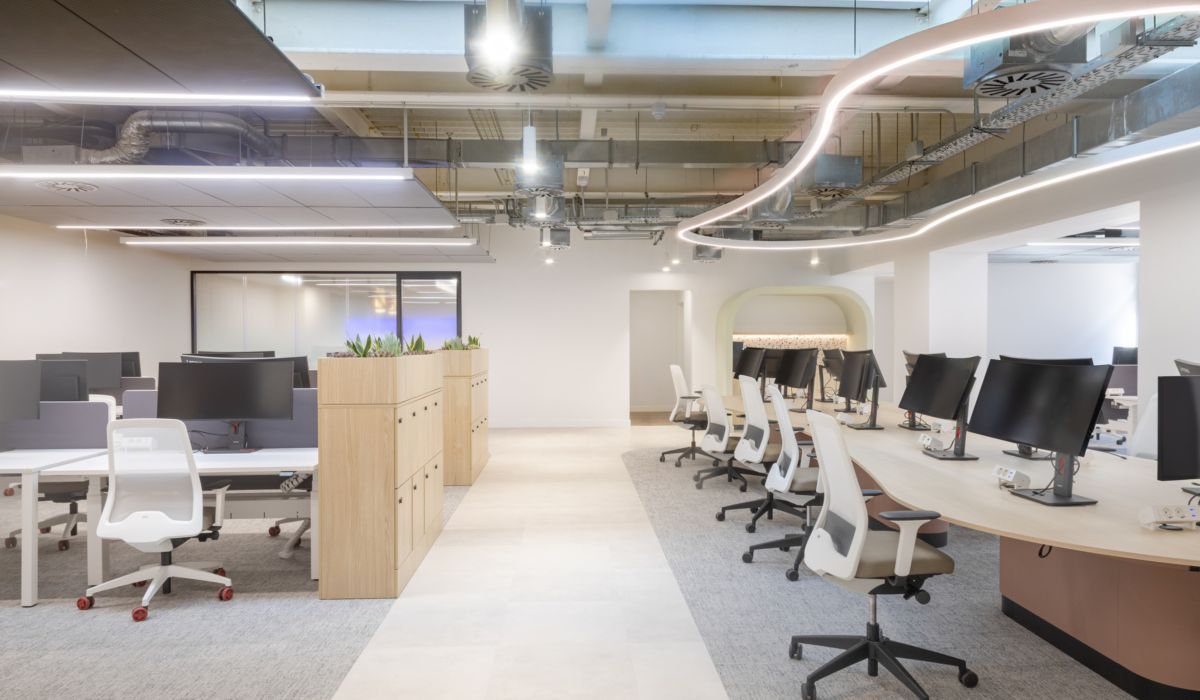
When carrying out office interior design and construction, businesses should approve samples for each application and record material codes in the project documentation. An approval sample showing the board core, surface finish, and finished edges provides a reference for delivery inspections and for checking specifications when replacements are needed.
9. Frequently asked questions about engineered wood (FAQ)
Board product codes help identify suitable usage conditions and refinishing options. For used furniture, the condition of the board edges and surface finish should also be assessed before deciding whether to repair, repaint, or send it for recycling.
9.1. Is engineered wood durable enough for office use?
Engineered wood can provide long-term service when the board grade, surface finish, and construction suit the usage conditions. Wear also depends on loads, humidity, and maintenance. When assessing a specific proposal, review the warranty terms and the possibility of replacing individual components.
9.2. Is a green core enough to identify a moisture-resistant board?
A green core is an identifying feature of some moisture-resistant board ranges. To confirm the board type and its intended applications, check the product code against the technical data sheet and relevant moisture or thickness-swelling properties.
9.3. Can an engineered wood cabinet with swollen edges be repaired?
First, check whether only the edge banding has detached or whether the board core has also swollen. The banding can be reattached if the core remains flat, dry, and sound. If the core has swollen or become friable, replacing the damaged component is usually more appropriate because restoring its original dimensions is difficult. Address the source of water ingress before installing the replacement component.
9.4. Can engineered wood be recycled?
Some types, such as particleboard and MDF, can be recycled at facilities with suitable processes. Acceptance depends on the core material, surface finish, adhesive, and contaminants remaining after dismantling. Businesses can provide material information to the collection service to confirm its acceptance requirements.
9.5. Can engineered wood be painted?
Yes. Unfinished MDF is suitable for many paint systems when its surfaces and edges are properly prepared. MDF edges usually absorb more paint than the panel faces, so they require appropriate preparation and a suitable primer. For boards already faced with melamine or laminate, check the paint system’s adhesion to the existing surface.