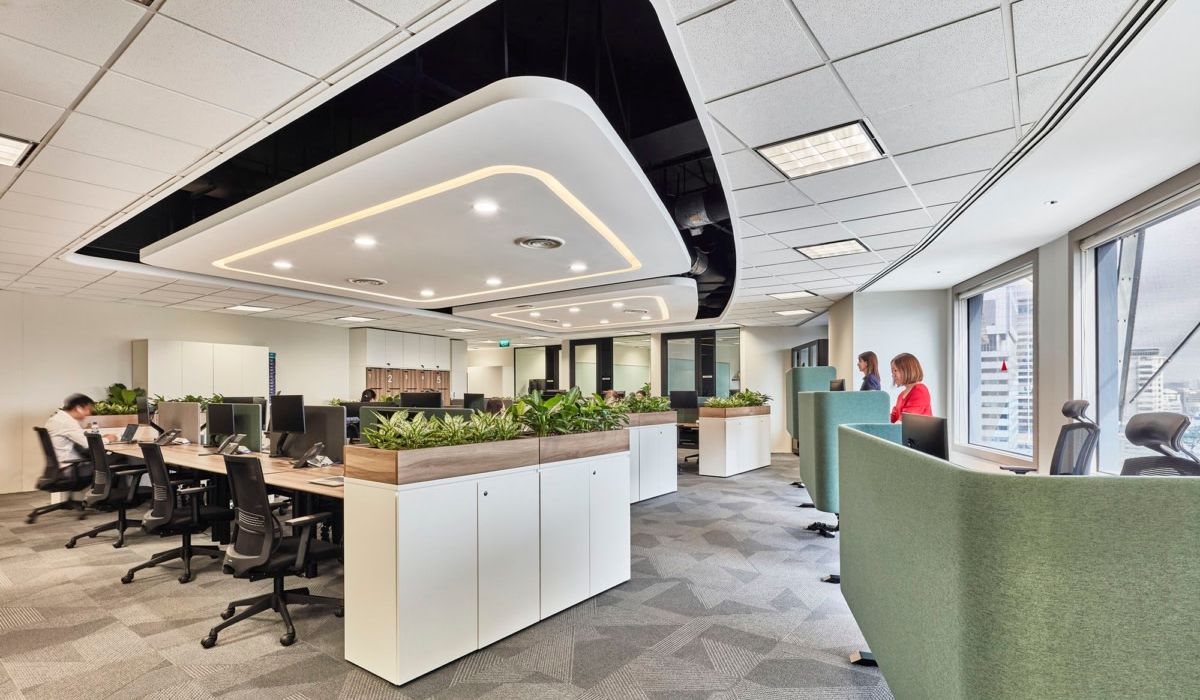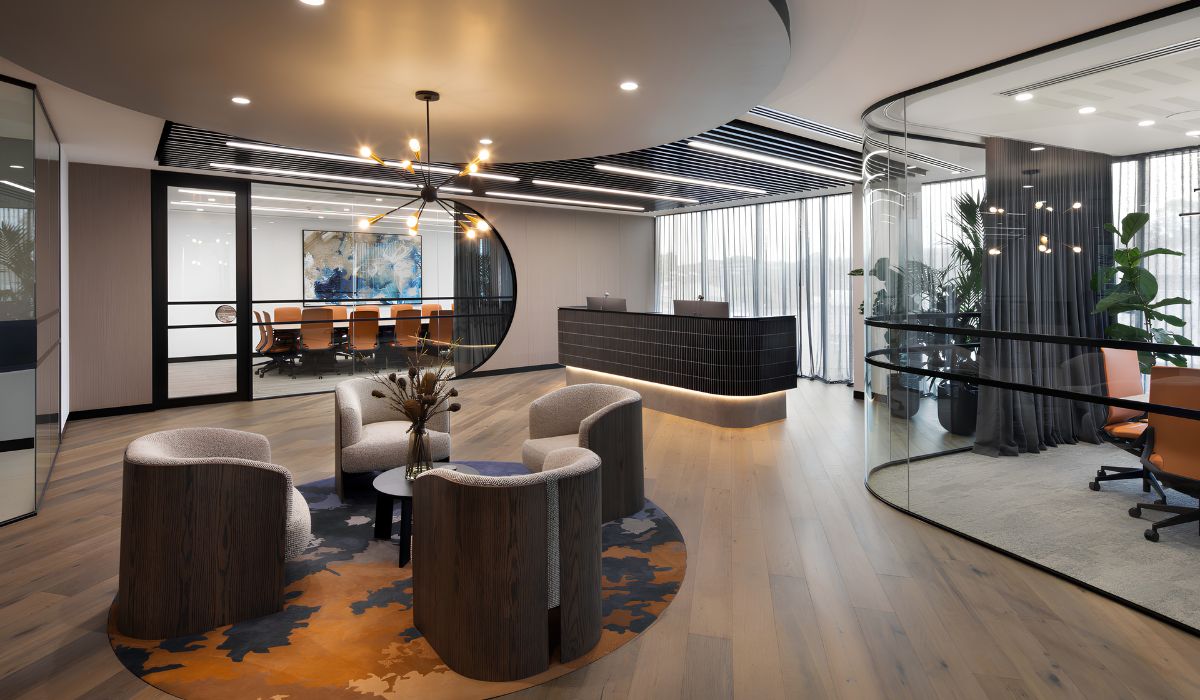
Office blinds and shades should suit sun exposure, desk locations, and the light control requirements of each area. Roller shades, vertical blinds, and curtains offer different ways to adjust daylight. Choosing the right type and testing samples at the window helps businesses assess glare, views, and privacy before installation.
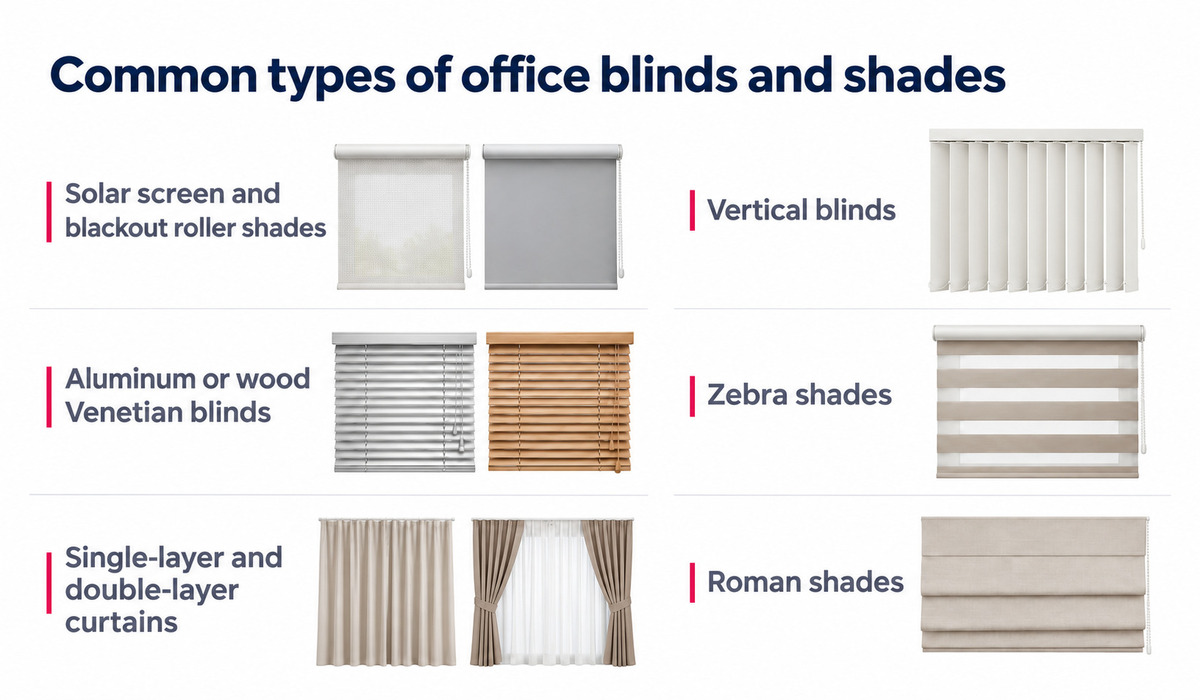
1. Common types of office blinds and shades
For desks beside glazing, businesses often need to reduce glare while retaining daylight. Meeting rooms with projectors may require more complete light blocking.
1.1. Solar screen roller shades and blackout roller shades
Roller shades use a fabric panel that moves vertically and rolls onto a tube above the window. Solar screen fabrics allow light through openings in the weave and can partially preserve outdoor views. Blackout fabrics suit areas that need to block direct sunlight or reduce light during presentations.
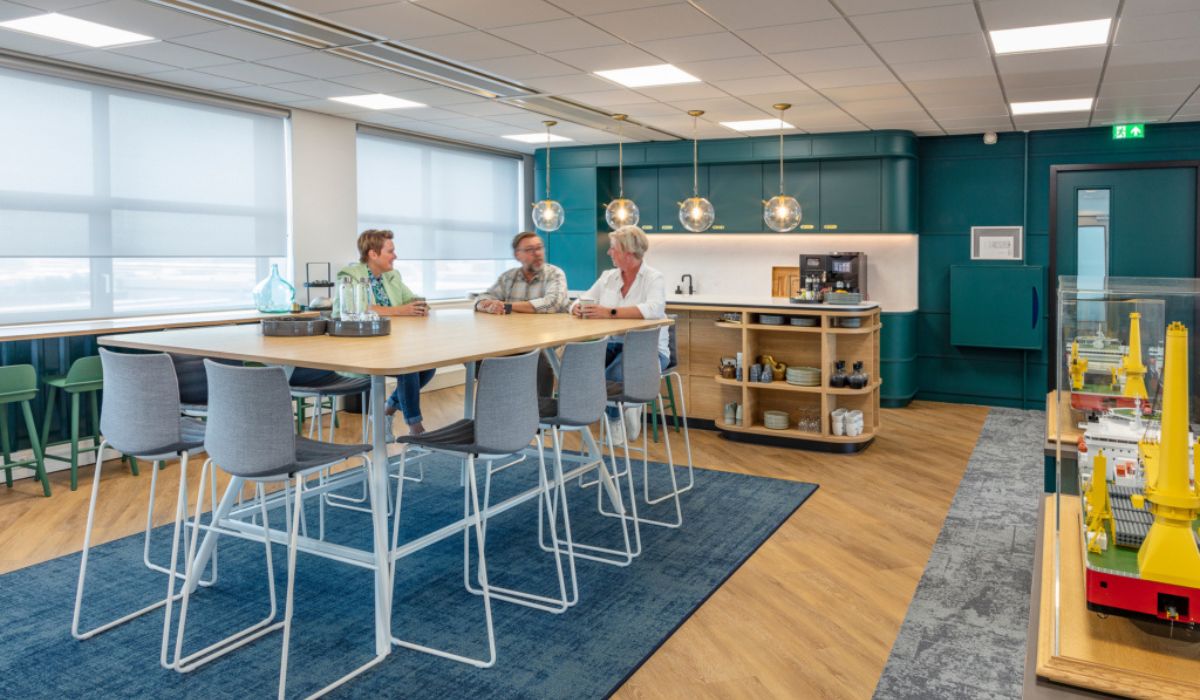
The light blocking performance of office roller shades depends on the fabric specification and installation method. Even with the same hardware, two fabrics can produce different light levels at a workstation. Where more complete light blocking is required, check the gaps along both sides and between adjacent shades.
1.2. Vertical blinds
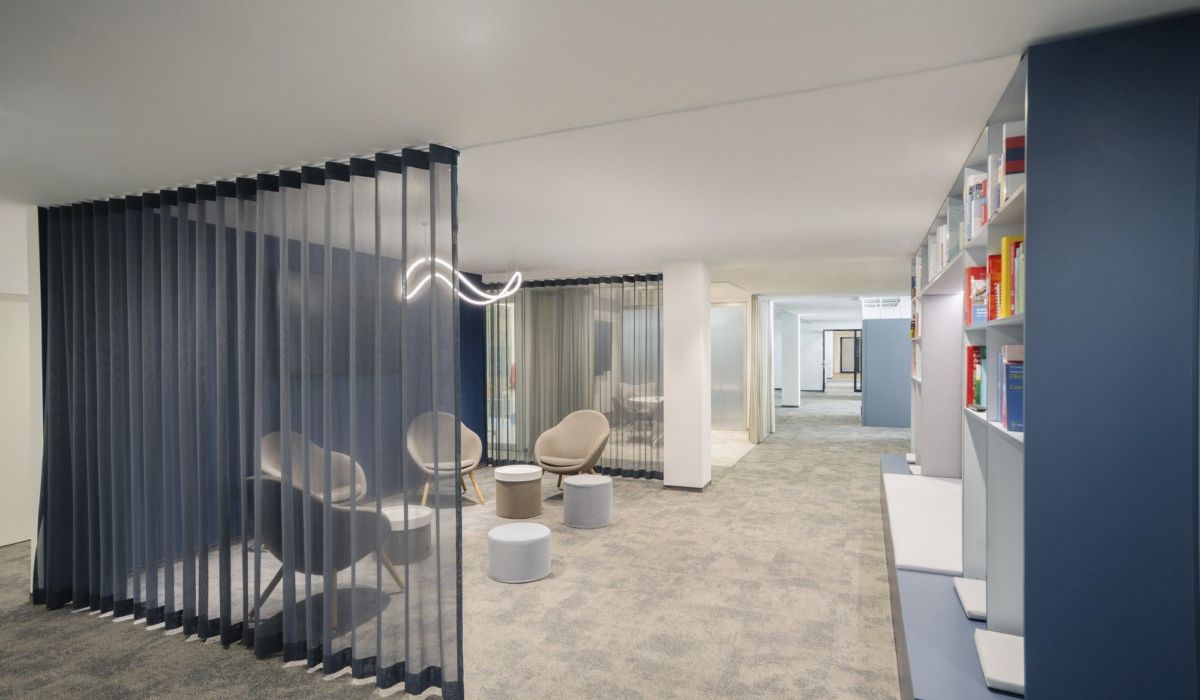
Vertical blinds consist of individual vanes suspended from a track. The vanes can rotate to redirect incoming light or draw to one side. This tilting mechanism suits wide glazed areas where businesses want to adjust daylight while keeping the blinds across the window.
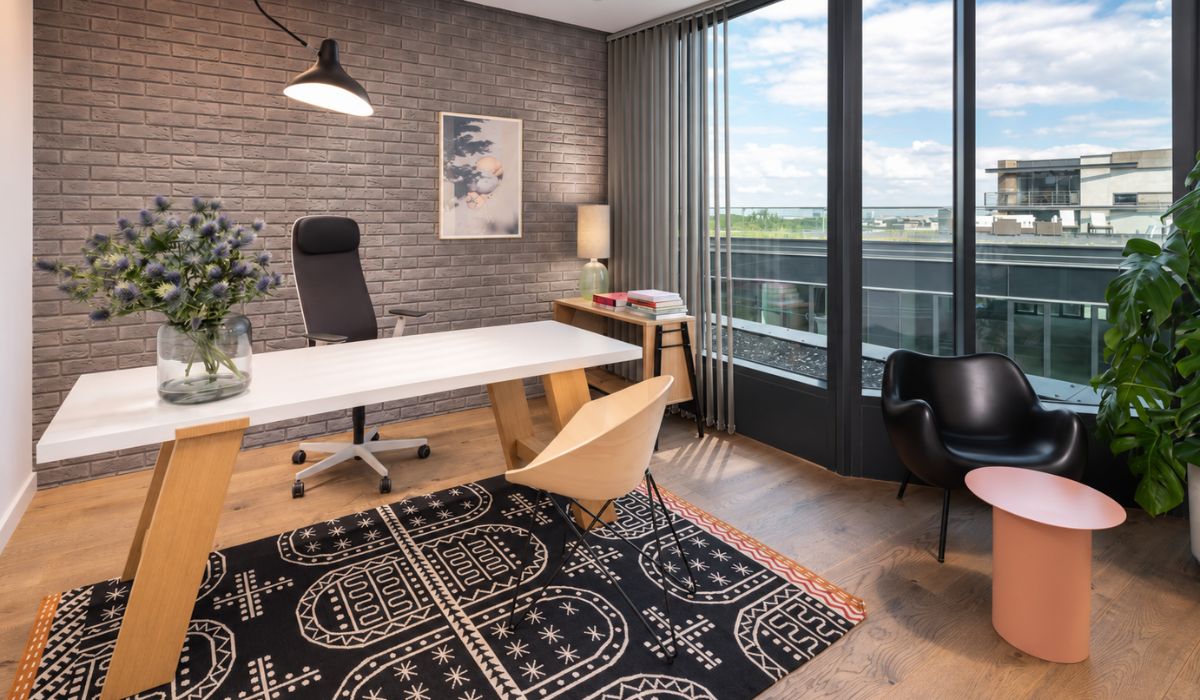
Allow enough space for the stacked vanes to avoid obstructing door openings or interfering with furniture. At openings frequently exposed to wind, test the blinds and observe how stable the vanes remain. Gaps between vanes also require consideration in rooms with greater privacy requirements.
1.3. Aluminum or wood Venetian blinds
Horizontal slats tilt to adjust the direction of incoming light and lift to open up the view. Aluminum blinds have slim slats that suit windows in spaces featuring glass or metal. Wood blinds introduce a material accent that can coordinate with desks, cabinets, or wall cladding.
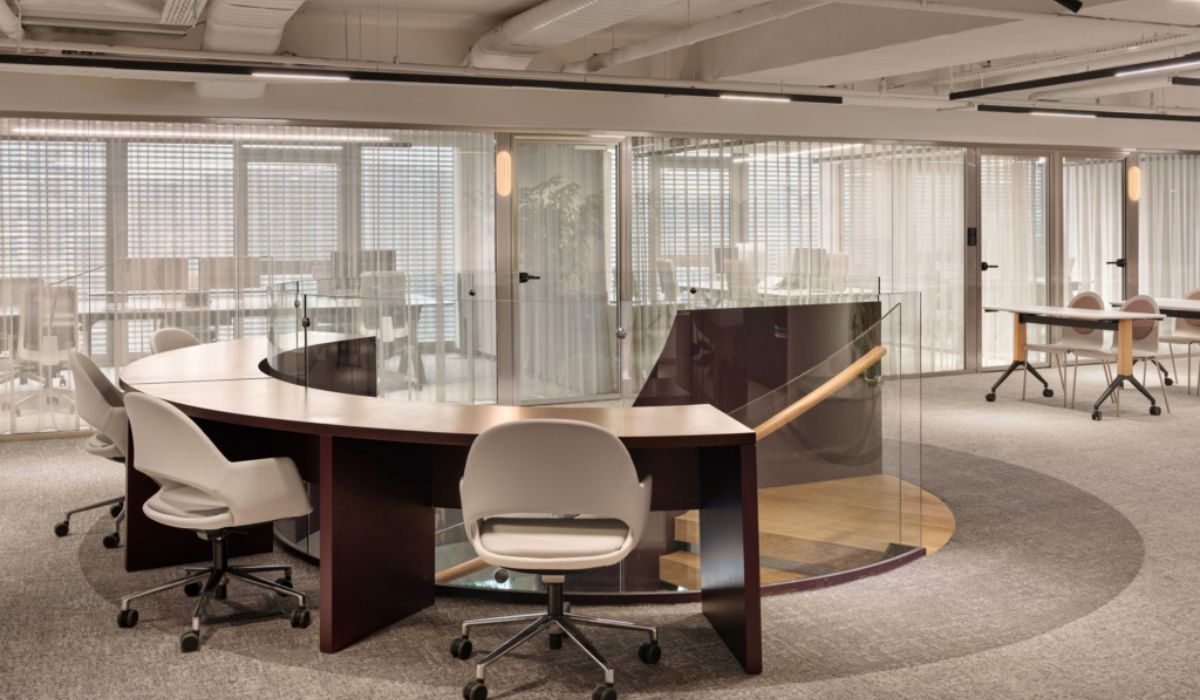
For large windows, check the dimensions and weight against the hardware specifications. The slats also take up space above the window when fully raised. Cleaning methods should suit the finish applied to the aluminum or wood.
1.4. Zebra shades
Zebra shades use alternating bands of opaque and sheer fabric. Adjusting the shade changes the alignment of these bands, increasing or reducing the light passing through. Their horizontal pattern suits windows that need a subtle accent within the overall interior.
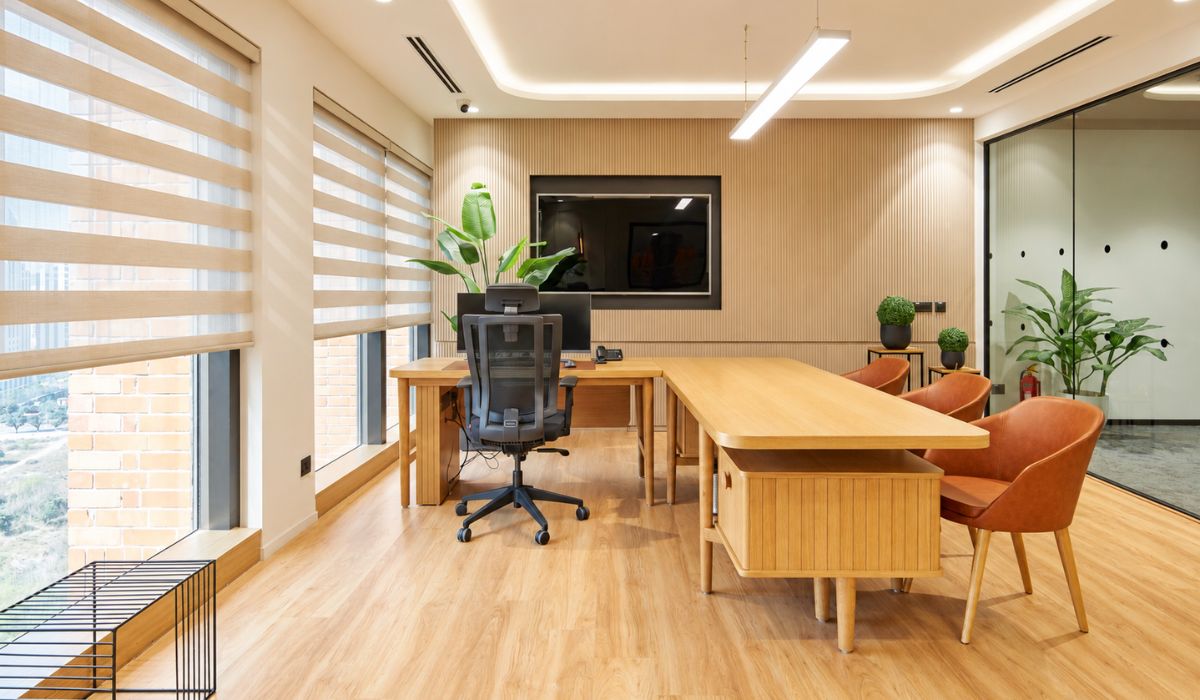
Assess sunlight control using the selected fabric sample and the alignment of the bands when closed. For rooms requiring reduced light during presentations, test the fully closed position and observe any light passing through the fabric bands or around the edges.
1.5. Single-layer and double-layer curtains
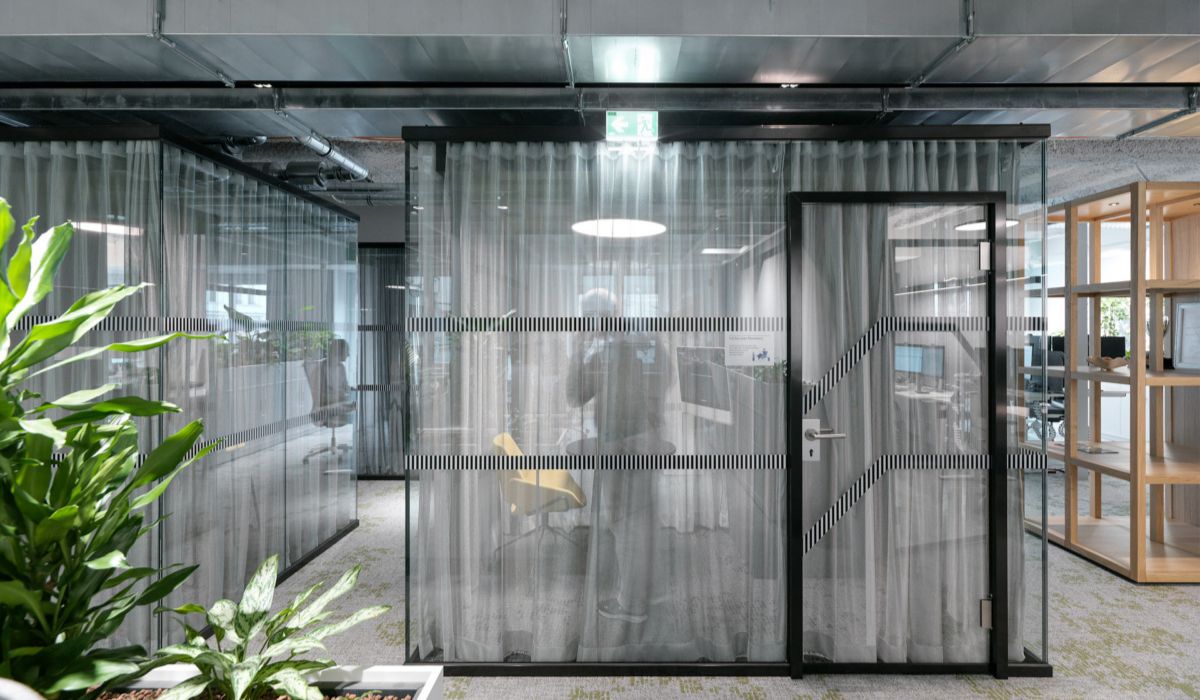
Curtains draw to both sides or stack on one side, making them suitable for director offices and reception areas. A single layer can use light-filtering or blackout fabric, depending on the requirements. With double-layer curtains, the sheer and heavier layers operate independently to adjust light levels.
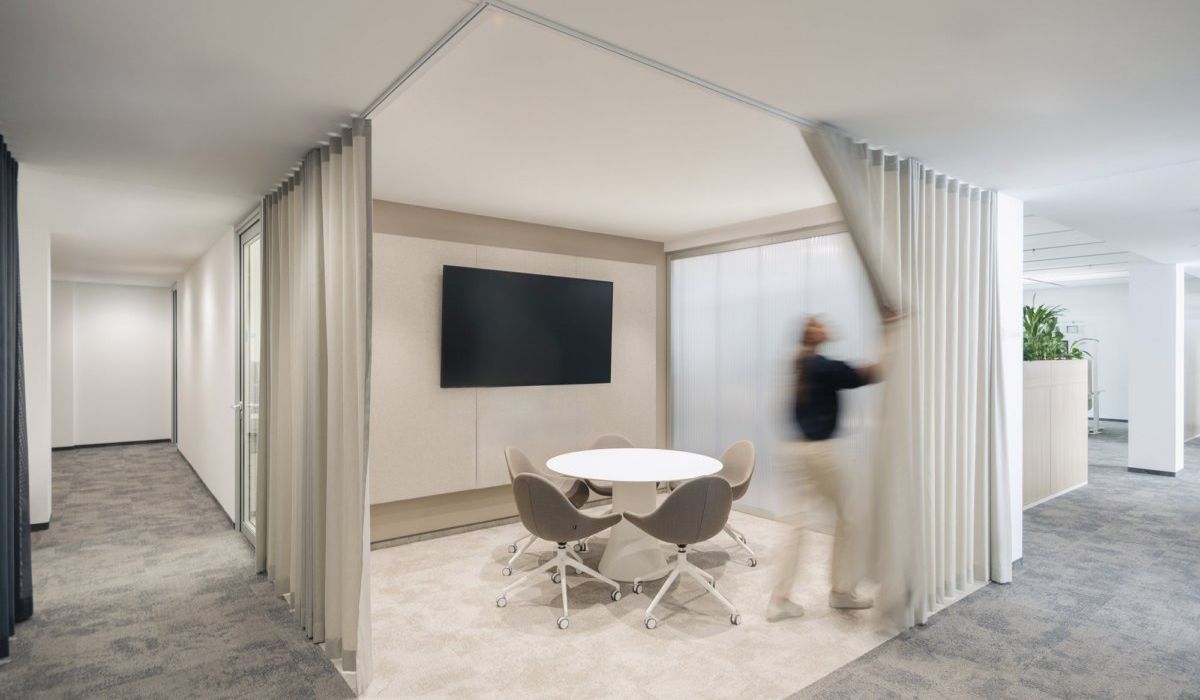
Before selecting curtains, allow enough space beside the window for the fabric to stack. Coordinate curtain length and track placement with desks, cabinets, door openings, and access for floor cleaning. Fabric care labels indicate suitable washing, drying, or cleaning methods.
1.6. Roman shades
Roman shades lift into folds, creating a neat fabric treatment within the window area. They suit windows in private offices or reception areas where businesses want a fabric finish but have limited space for curtains to stack at the sides.
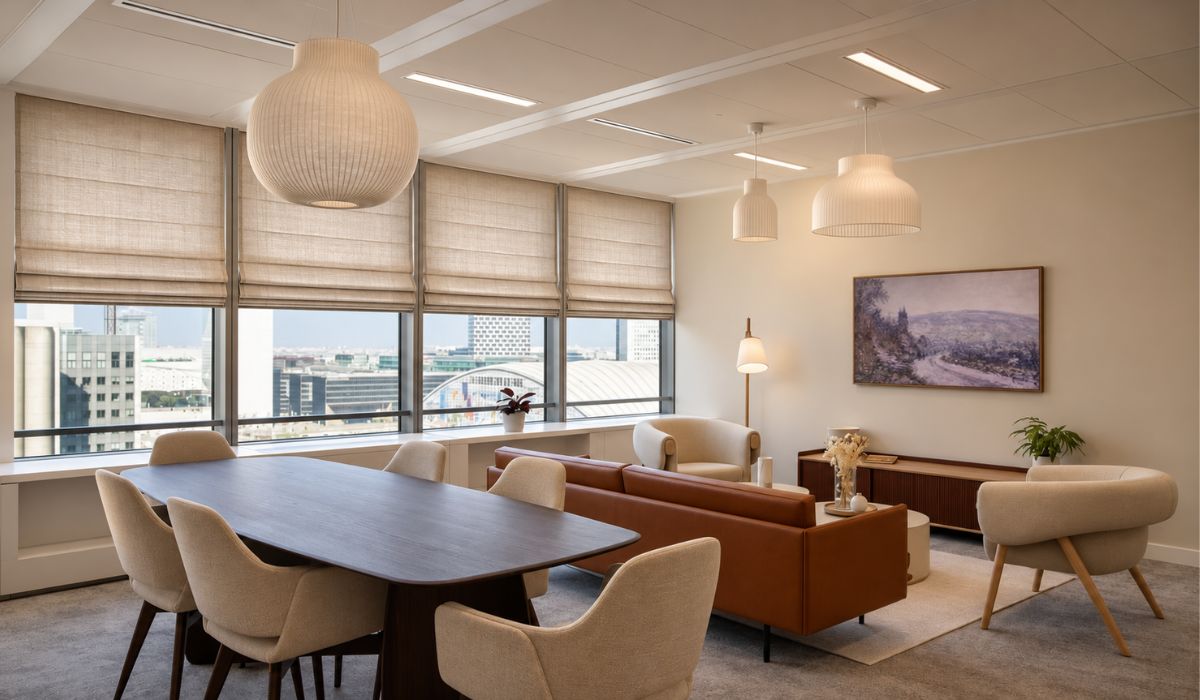
When fully raised, the folded fabric still occupies space at the top of the window. Check this stack height to preserve the desired daylight opening and avoid obstructing window sashes. The rod pockets, lift cords, and fabric removal method also affect cleaning.
2. How to choose office blinds and shades by area and sun exposure
Sunlight reaching a desk can change throughout the day, even when windows are on the same building facade. Before choosing office blinds and shades for sun control, identify where glare occurs, when it appears, and how much light control each room needs.
2.1. Work areas near glazing
For desks beside glazing, observe direct sunlight on work surfaces and reflections on screens. East- and west-facing windows usually need particular attention in the morning or afternoon. External obstructions, glazing type, and seating positions also affect actual sunlight exposure.
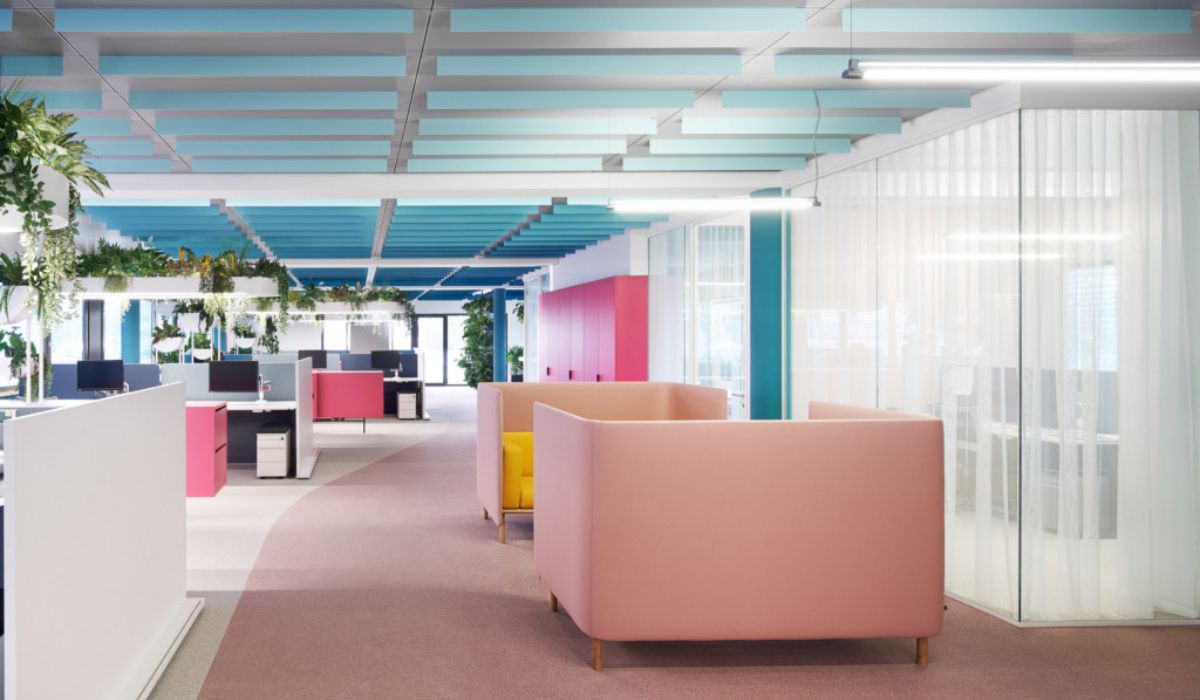
Solar screen roller shades or blinds with adjustable slats may suit areas where retaining daylight is a priority. If sunlight still causes glare at a workstation, test a fabric that blocks more light or adjust the desk orientation. Coordinate window treatments with electric lighting to maintain suitable lighting conditions within the office design when the blinds or shades are closed.
2.2. Meeting rooms, director offices, and reception areas
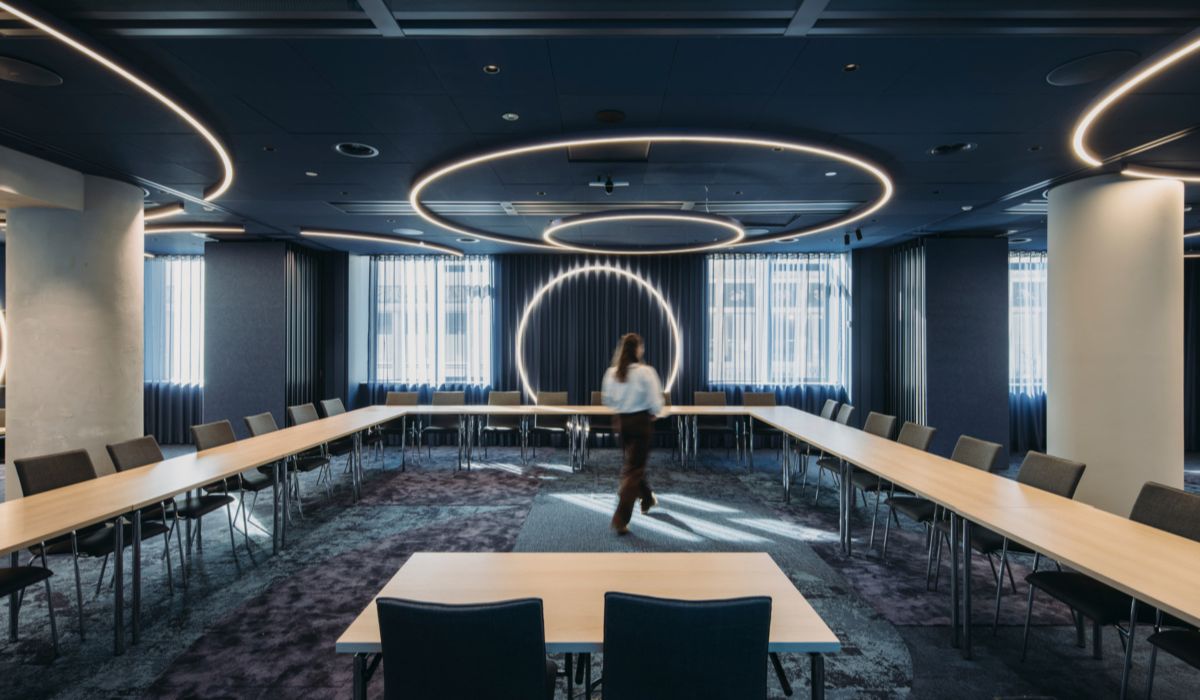
For meeting rooms with projectors, test the proposed window treatment with the equipment under daytime conditions. Rooms with large displays may need reduced reflections from the main viewing direction. Determine the required light control by checking content legibility and seating positions.
Executive offices and reception areas can use double-layer curtains, Roman shades, or zebra shades to suit window dimensions and interior finishes. Where privacy is required, check visibility from the corridor or outside area. Windows with different usage requirements can have separate, independently operated treatments.
2.3. Coordinating window treatment colors with office interiors
Window treatment colors can draw from the walls, flooring, or a furniture detail to create visual continuity. Where office decor already includes several colors, plain fabrics can make the window area feel less busy. Brand colors can be used in a selected area that suits the overall interior.
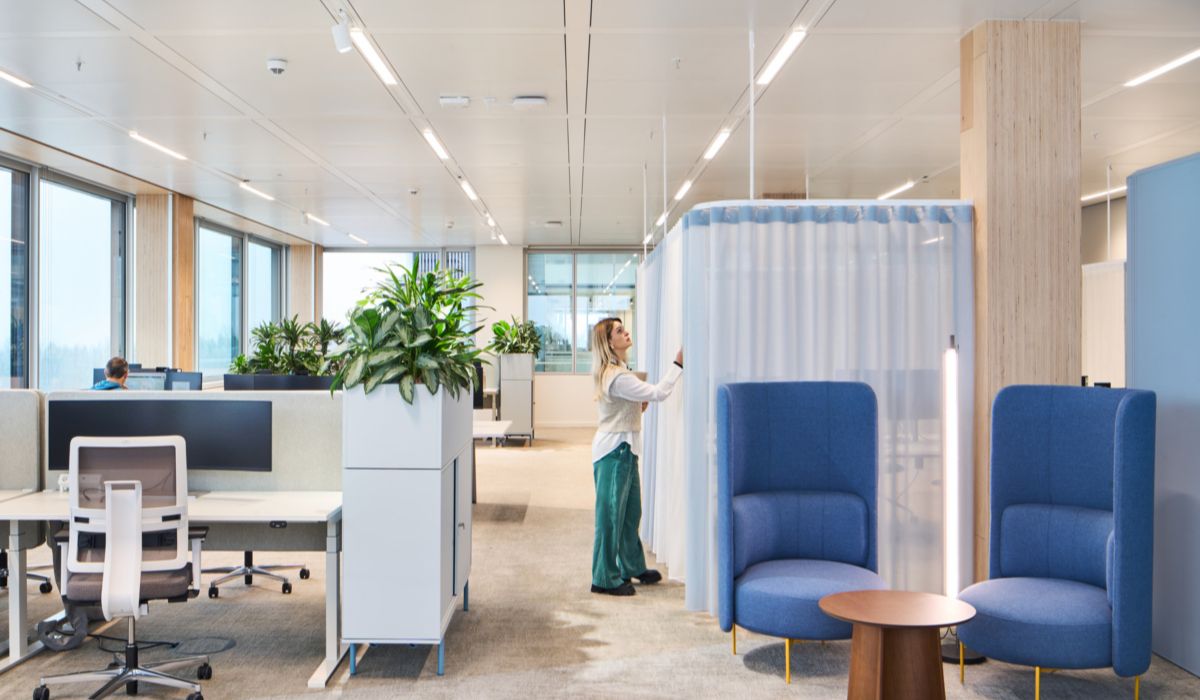
View fabric samples in sunlight and under electric lighting. For screen fabrics, also check visibility through the material at the intended location. Compare the apparent color and thickness with the light control specifications of the selected sample.
3. What to check before ordering office blinds and shades
Window treatments should fit the glazing and operate conveniently once doors, desks, and chairs are in their final positions. Before confirming an order, businesses should agree on installation dimensions and fabric codes based on actual site conditions.
3.1. Window dimensions, mounting positions, and treatment divisions
Order dimensions depend on whether the treatment will be mounted inside the window recess or outside it to overlap the glazing. The installer should measure on site, check the fixing surface, and clearly show the coverage on the drawings. For wide glazed areas, divisions between units should account for window frames and areas requiring independent adjustment.
Check potential obstructions before fabrication:
- Window and door handles: Check their projection and opening direction so shades can move and slats can rotate freely.
- Stacking space: Allow room for fabric, vanes, or folds when the treatment is fully open.
- Control positions: Place pull cords or switches where they remain accessible after furniture installation.
- Gaps between units: Check gap locations against workstation positions and the direction of incoming light.
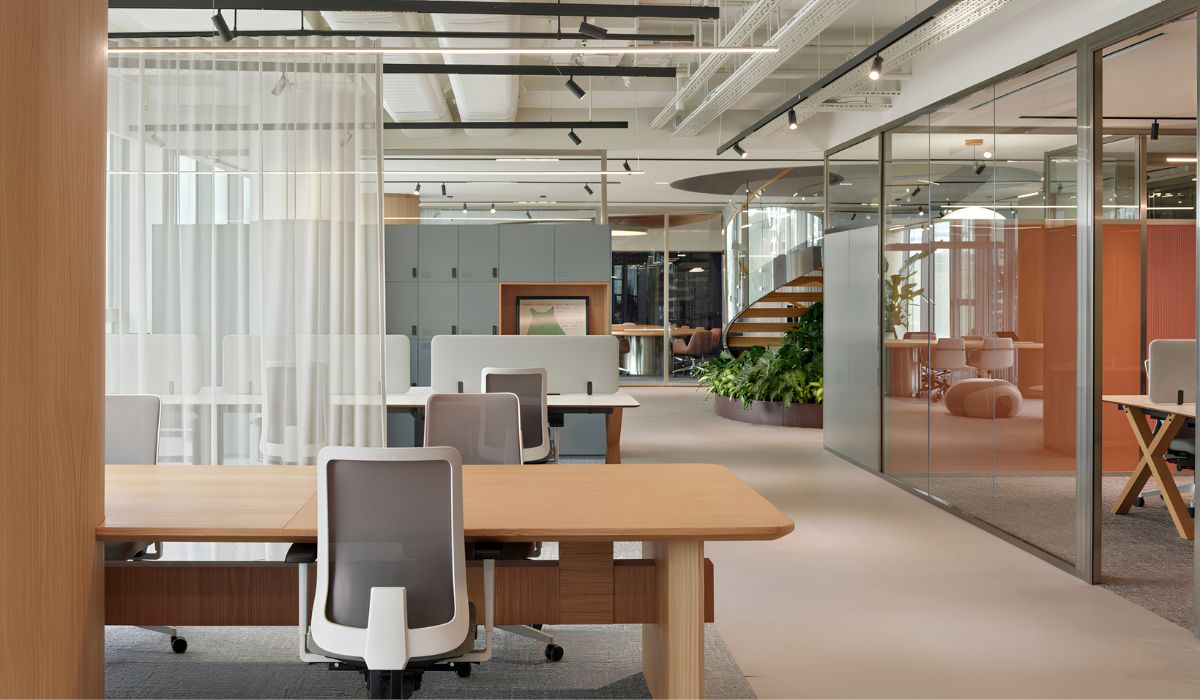
3.2. Fabric samples, light transmission, and privacy
The openness factor indicates the proportion of open space within the fabric weave. Visible light transmittance indicates how much visible light passes through the fabric. Read both specifications alongside the fabric code, color, and intended light control requirements when selecting a sample.
Place the sample at the window during the period when glare usually occurs. Assess it from the workstation and from the side where views into the room need to be screened. Test it with the monitor switched on to assess reflections. When approving a sample, retain its fabric code, color, and accompanying specifications for comparison after installation.
4. Cleaning and maintaining office blinds and shades
Dust on slats and marks on frequently handled areas require different cleaning methods. Base cleaning schedules on actual dust buildup, and select cleaning methods according to the surface and the instructions for each product.
4.1. Cleaning by surface and construction
A soft cloth or suitable vacuum attachment can remove light dust from many types of window treatments. Before using water or cleaning solutions, check the coating and care label. Some blackout or coated surfaces must remain dry.
| Surface type | Care instructions to check | Points to consider |
|---|---|---|
| Roller shade fabrics and vertical blind vanes | Remove dust using tools approved for the specific fabric | Check the coating before damp wiping |
| Fabric and sheer bands on zebra shades | Clean gently without pulling or scrubbing the sheer sections | Keep the surface flat and avoid shifting the bands |
| Curtain and Roman shade fabrics | Read the care label before removing for washing or specialist cleaning | Check linings, cords, and rods |
| Aluminum or wood slats | Dust with a soft cloth according to the surface care instructions | Check suitability for contact with water and cleaning agents |
If the product permits damp wiping, test a small, inconspicuous area before cleaning the wider surface. Allow the treatment to dry as instructed before rolling or stacking it. For systems that are difficult to dismantle, discuss cleaning methods with the installer at handover.
4.2. Checking pull cords, tracks, and hardware
Frayed pull cords, misaligned vanes, or shades that roll unevenly indicate a need for inspection. If a treatment jams, stop operating it and identify the obstruction before continuing. Lubrication, hardware replacement, and motor adjustments should follow the instructions for the specific system.
Businesses can record operating conditions during cleaning to identify loose or worn components early.
- Pull cords and chains: Check for fraying, breaks, tangles, or slipping during operation.
- Tracks and hangers: Look for sticking points, misaligned vanes, and loose connections.
- Motorized treatments: Check control response, opening and closing travel, and unusual noises.
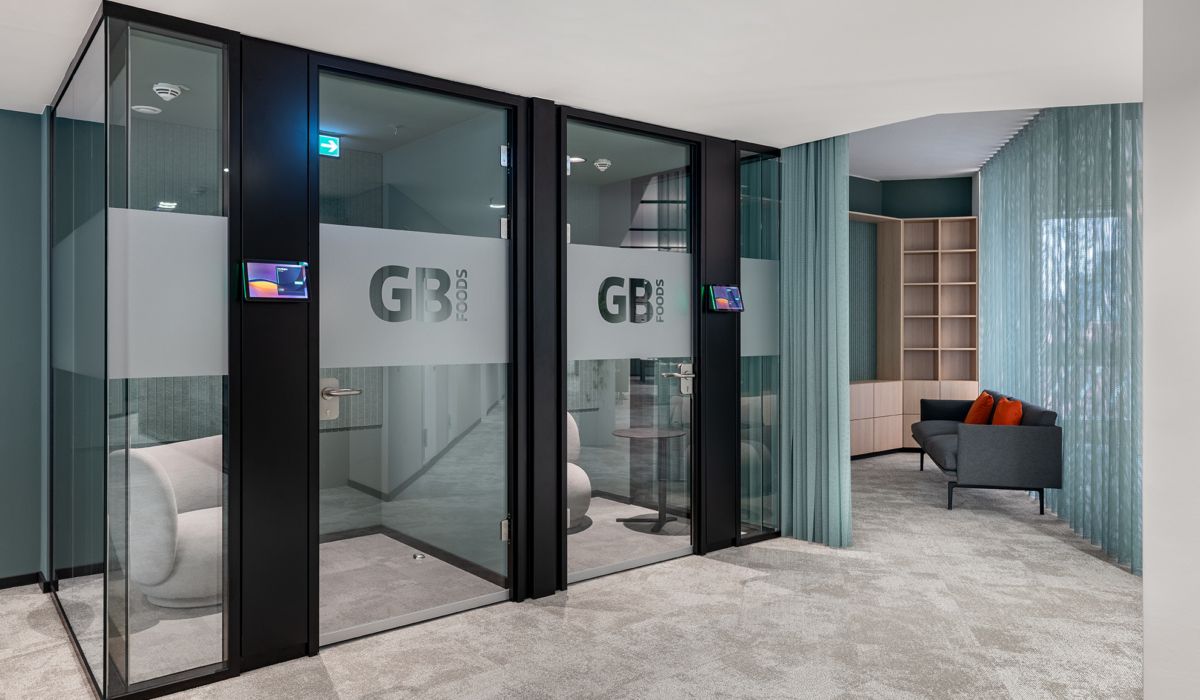
Before installing blinds and shades throughout the office, businesses should test one unit in an area with frequent glare or a greater need for light blocking. This allows them to assess the fabric, dimensions, and ease of use. During office design and build, mounting positions should also suit desk arrangements and the construction of the glazing system.
5. Frequently asked questions (FAQ)
5.1. Do solar screen roller shades prevent people from seeing inside at night?
Privacy depends on the fabric’s openness factor and the difference in light levels between the two sides. When the room is brighter than the exterior, some screen fabrics allow views inside. Businesses should check visibility from the side where privacy is needed at night and consider an additional opaque layer if required.
5.2. Why does light still enter around the edges of blackout shades?
Light can pass through gaps between the fabric edges and the wall, window frame, or adjacent shade. If a room needs to be darker, the installer should review coverage and options for addressing side and top gaps. Assess overall light blocking performance across the complete installed system.
5.3. When should businesses choose motorized office blinds and shades?
Motorized treatments suit situations where several units need simultaneous adjustment, windows are difficult to reach, or rooms frequently switch between light control settings. Before selecting a system, establish the power supply arrangements, control positions, and ability to operate groups of blinds or shades according to the intended use.
5.4. What should an office blinds and shades quotation include?
Check the fabric code, dimensions, and area calculation method for each unit. Hardware, motors, installation labor, delivery, taxes, and warranty terms should be clearly stated. For small windows, ask whether a minimum chargeable area applies so that total costs can be compared for the same scope of work.
5.5. Can the fabric be replaced while retaining the existing hardware?
Some systems allow fabric replacement while retaining compatible hardware that remains in suitable condition. A technician should check the system construction, dimensions, fabric weight, and operating condition before confirming suitability. For roller shades, compatibility with the roller tube and operating mechanism also needs to be checked.