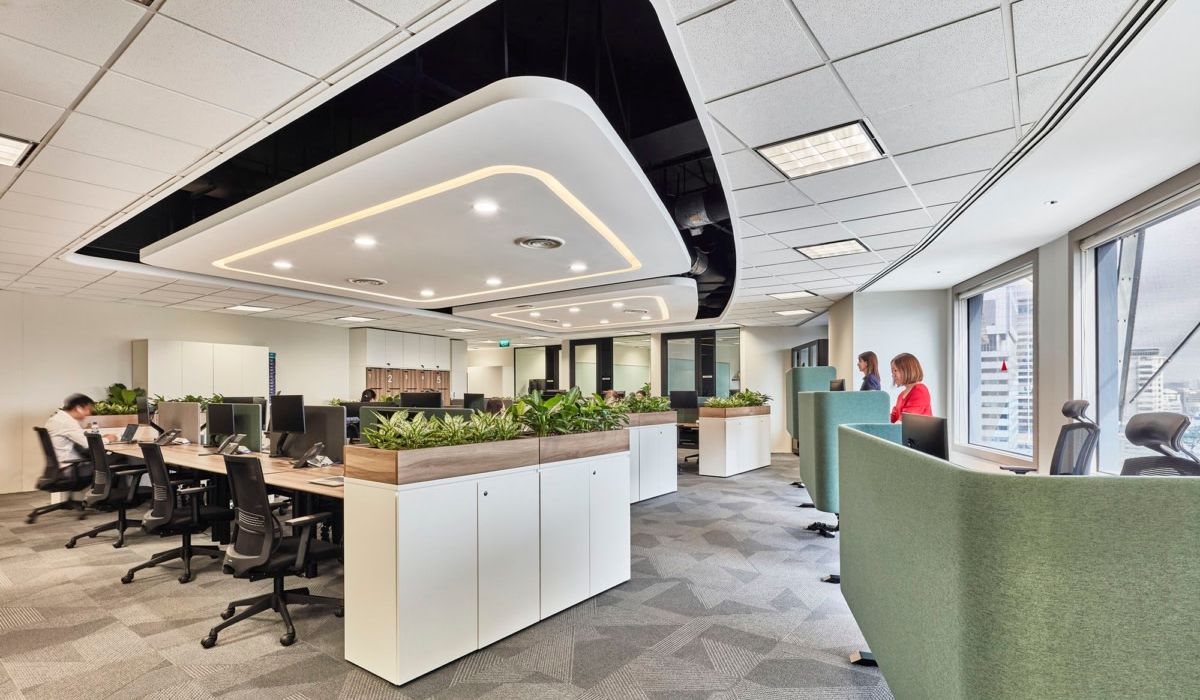
Remote, Hybrid, and In-Office work models differ in work location and attendance requirements. Each model also has its own approach to team coordination. Before choosing one, businesses should consider the nature of the work, the need for in-person interaction, and operational requirements.
1. What are Remote, Hybrid, and In-Office work models?
1.1. What is the Remote work model?
Remote work is an arrangement in which employees work outside the office, such as from home or a coworking space. They communicate and coordinate primarily through online tools. The work location and schedule depend on job requirements and the agreement with the business.
1.2. What is the Hybrid work model?
In a Hybrid work model, employees work in the office on some days and remotely on others. Depending on the arrangement, the business may set or adjust the office schedule. Employees may come in for team meetings, client discussions, or collaborative tasks.

1.3. What is the In-Office work model?
In-Office work is an arrangement in which employees perform most of their work at the business’s office. They attend according to an agreed schedule to complete tasks, coordinate in person, or use equipment and documents available on site.
2. Comparing Remote, Hybrid, and In-Office work models
The three models differ in work location, attendance schedules, and how employees coordinate. These factors affect workforce management, recruitment reach, and operating costs.
| Criteria | Remote | Hybrid | In-Office |
|---|---|---|---|
| Work location | Outside the office, at an agreed location | A combination of remote and office work | Primarily at the office or an assigned location |
| Working hours and attendance | Fixed or flexible by agreement | Fixed or flexible office schedule | Attendance based on the schedule and job requirements |
| Operating costs | May reduce premises costs, while still requiring equipment and remote work tools | Depends on attendance schedules, floor area, and operating arrangements | Requires office space, equipment, and workplace services |
| Communication | Primarily online; communication channels and response times need to be agreed | A combination of online communication and in-person meetings | In-person communication and support are readily available |
| Recruitment reach | May extend geographically, depending on recruitment requirements | May extend geographically, subject to attendance requirements | Prioritizes candidates who can meet on-site work requirements |
| Flexibility | Location flexibility depends on company policy | Flexibility between remote and office work | Limited flexibility when on-site attendance is required |
| Supervision and management | Tracks results, progress, and coordination remotely | Manages outcomes, responsibilities, and attendance schedules | Makes it easier to observe, guide, and support employees on site |
| Team connection | Requires proactive communication and relationship-building | In-person meetings take place according to the coordination schedule | Offers more opportunities for in-person interaction |
| Information security | Requires control of devices, accounts, and remote access | Requires security controls in both work environments | Centralized device management and control of access and data |
| Suitable work | Work with limited reliance on specific equipment or locations | Work that combines individual focus with in-person collaboration | Work that requires on-site equipment, contact, or operations |
The right work model depends on the nature of the job, attendance needs, and how employees coordinate. Different departments within the same business may use different models to meet their specific work requirements.

3. Pros and cons of each work model
The benefits and limitations of each model depend on how it is implemented. Before choosing, businesses should consider the nature of the work, their management capabilities, and employee needs.
3.1. Pros and cons of the Remote model
Remote work reduces the need for office attendance but creates specific coordination and self-management requirements. Before assessing its benefits for recruitment and space use, businesses should consider whether employees have suitable remote working conditions.
| Pros | Cons |
|---|---|
| Employees working from home may save commuting time and costs | Fewer opportunities for in-person discussion can make frequent guidance and learning more difficult |
| Office space requirements may decrease if the business can adjust its floor area | Equipment, technology, and remote employee support still incur costs |
| Businesses can reach candidates beyond the area where the office is located, depending on recruitment requirements | Geographic distance and time zone differences may make coordination more difficult |
| Employees may choose a suitable space to focus, depending on their working conditions | Employees need to manage their own work, while the business must control devices, connectivity, and data |
Businesses should clearly define work outcomes, reporting methods, and response times. Coordination rules help reduce disruptions when employees do not meet in person regularly.

3.2. Pros and cons of the Hybrid model
Office schedules affect how often team members can meet in person and how many workstations are needed. Businesses need to coordinate schedules to organize shared activities and maintain communication when employees work remotely.
| Pros | Cons |
|---|---|
| Employees can work remotely on suitable tasks and come to the office when needed | Different attendance schedules may make it difficult for team members to meet in person |
| Teams can hold meetings, training, and collaborative activities at the office | Businesses need an agreed way to share information between office-based and remote employees |
| Workstation use can be adjusted based on the number of employees present | Enough workstations are still needed on days when many employees come in |
| Work arrangements can be tailored to the needs of different employee groups | Equipment and tools must be maintained in both work environments |
Businesses should define which activities will take place on office days and agree on how team members will hand over work. If schedules are poorly coordinated, in-person meetings may not meet the team’s communication needs.

3.3. Pros and cons of the In-Office model
Having employees at the office makes it easier to provide guidance, coordinate work, and use on-site facilities. The business must maintain the workplace, while employees need to follow the office schedule and spend time commuting.
| Pros | Cons |
|---|---|
| Makes it easier to discuss and handle work that requires in-person coordination | Employees typically spend time commuting to work |
| Makes on-site training, guidance, and support easier to organize | The business must cover office space, equipment, and operating costs |
| Suitable for work that requires specialized equipment or paper records at the office | Roles requiring regular on-site attendance are difficult to move to remote work |
| Makes it easier to organize shared activities when employees work in the same space | Recruitment reach may be limited by candidates’ ability to travel to the workplace |
Regular attendance supports communication and training, but does not guarantee higher productivity or stronger engagement. Businesses still need to organize work, assign responsibilities, and evaluate results.

4. Should your business choose Remote, Hybrid, or In-Office?
Businesses should choose a work model based on the nature of the job and the need for in-person attendance. Each model suits different conditions:
- Remote: Suitable when employees can work remotely and the business can track and evaluate their results from a distance.
- Hybrid: Suitable when employees have independent tasks but still need to meet and collaborate in person at certain times.
- In-Office: Suitable for work that requires on-site operations, specialized equipment, or frequent in-person contact.
Coordination, work management, and data security requirements also influence the decision. Businesses should define work schedules, role responsibilities, support tools, and data controls. Departments with different work requirements can use different models instead of following one arrangement across the entire business.

5. How does the work model affect office space needs?
Work schedules affect how many employees are present at the same time, which in turn determines workstation needs and how the space is used. Businesses should plan for the busiest days to ensure there are enough workstations. Team meetings, training, and in-person discussions also create demand for meeting rooms and support spaces.
When an office serves different types of work, businesses can consider activity-based working (ABW). Remote or Hybrid arrangements may help reduce leased floor area if actual workstation demand decreases and the business can adjust its space. When planning office interior design, businesses should consider attendance schedules, space usage, and actual site conditions.

6. Trends in Remote, Hybrid, and In-Office work
An Accenture survey in 2021 of 9,326 workers across 11 countries found that 83% considered Hybrid the best model for the future. Microsoft’s 2021 Work Trend Index found that 66% of business decision-makers were considering changes to office space for Hybrid work. In addition, 73% of workers wanted to retain the option of flexible remote work.
In Vietnam, a July 2026 Reeracoen survey found that 65% of 254 participants preferred Hybrid work, while 7% chose fully Remote work. The online survey was sent to Reeracoen’s candidate database and professional network. Its findings indicate that participants tended to favor a Hybrid model combining time in the office with remote work.

Businesses should choose a work model based on the practical needs of each employee group, coordination requirements, and operating conditions. When considering a change, confirming attendance schedules and office space needs can help businesses assess suitable options before adjusting the workplace.
7. Frequently asked questions (FAQ)
7.1. Are Remote work and working from home (WFH) the same?
Remote work and WFH differ in where employees can work. With Remote work, employees work from home or another location approved by the business. WFH (Work from Home) specifically means working from home, either regularly or for a set period, depending on the business’s arrangements.
7.2. Which work model should a small business choose?
Small businesses should choose based on the nature of the work and their management capabilities. Remote work is suitable when employees can work remotely and the business can track their results. Hybrid work is suitable when employees need to meet in person at certain times. In-Office work is appropriate for tasks that must be performed on site.
7.3. Does Hybrid work require a set number of office days?
Each business sets the number of office days according to job requirements and its HR policies. A Hybrid schedule may be fixed or flexible. Businesses should agree on when in-person meetings will take place, how employees will coordinate, and what each employee is responsible for to avoid scheduling conflicts.
7.4. Which work model leads to the highest productivity?
Productivity depends on the nature of the work and how it is organized. A 2024 Nature study involving 1,612 employees at a technology company in China found that, during the trial, employees working from home two days per week under a Hybrid arrangement received performance ratings equivalent to those of employees working in the office. This finding does not establish one model as the most effective for every business.
7.5. Which work model is safest for data security?
Security depends on how a business manages accounts, devices, access rights, and data. NIST SP 800-207 emphasizes authenticating users and devices rather than automatically trusting them based on physical location or an internal network. Remote, Hybrid, and In-Office work all require measures suited to the systems and data in use.